
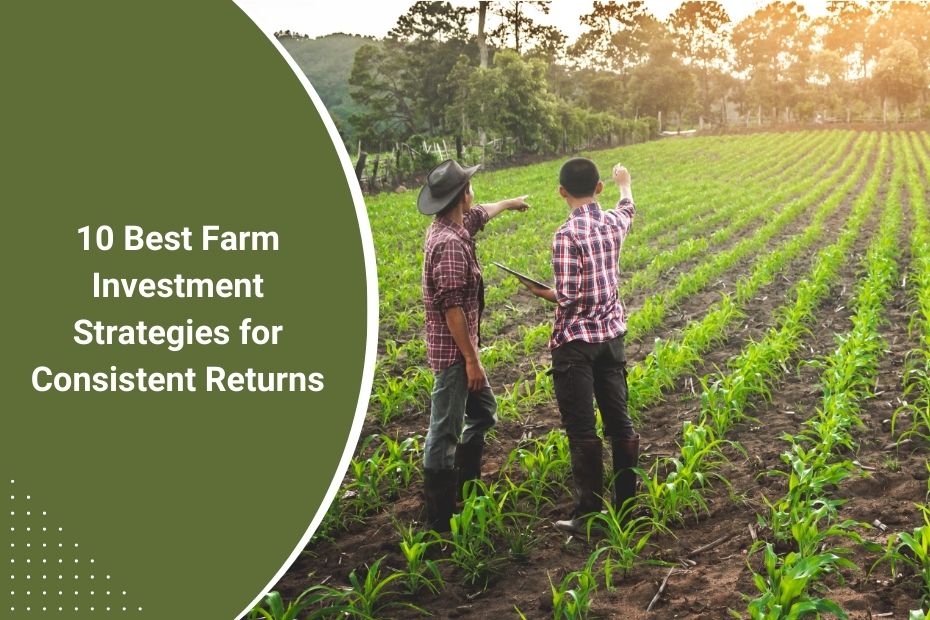
When you’re working with farmland or planning your next ag-related investment, consistency matters more than flashy returns. Farming has always been a long game, and if you’re serious about building steady, reliable income from it, you’ve got to be smart about where and how you invest. With input costs rising and markets shifting faster than they used to, the old set-it-and-forget-it model doesn’t hold up anymore. You need strategies that balance productivity with resilience—and you need them to fit your land, budget, and management style. In this article, I’ll walk you through ten farm investment strategies that are practical, proven, and well-suited for delivering consistent returns year after year.
1. Start by Diversifying Your Crop Selection
If you’re growing a single commodity crop year after year, you’re putting too much of your revenue on the line. Weather, market pricing, disease pressure—any one of those can sink a season. By diversifying your crop rotation, you spread that risk. You don’t have to go all-in on dozens of products, but adding high-demand specialty crops or mixing grains with legumes can smooth out your income.
Adding crops that mature at different times also helps you balance labor, reduce storage bottlenecks, and tap into multiple markets. Some growers include cover crops in this mix—not just for soil health, but also to harvest for forage or specialty uses. The key here is to look at your microclimate and local buyer demand, then match that to what your land can realistically support.
2. Invest in Ag Technology That Actually Works for You
Don’t chase every shiny piece of tech that promises efficiency. Instead, focus on tools that directly reduce your costs or improve your yields. GPS-guided tractors, soil sensors, automated irrigation, yield monitors—these aren’t gimmicks. They’re practical tools that pay for themselves if you use them right.
Precision ag can help you optimize your input use, especially with fertilizer and water. If you’re spreading uniformly across your fields without knowing the actual need, you’re likely wasting money. With the right data, you can adjust your rates and still maintain output—or improve it. Tech also helps you keep better records, which comes in handy when it’s time to secure financing or verify compliance for government programs.
3. Stick to Sustainable Practices That Build Long-Term Value
You’re not just farming for one season. Every choice you make impacts next year—and the one after that. That’s why investing in soil health, crop rotation, and water conservation should be a top priority. No-till or reduced-till systems can save fuel and improve soil structure. Cover cropping adds organic matter, suppresses weeds, and can reduce runoff.
These aren’t fringe methods anymore—they’re being used on farms that want to stay productive and profitable over the long term. If you lease out land, implementing these practices can also increase its appeal to operators. They’re looking for fields that support strong yields without excessive input needs. And if you’re actively farming, these changes often result in better margins after just a few seasons.
4. Add a Stream of Income with Agritourism
If your farm has access, space, and some scenery, agritourism might be worth exploring. It’s not for everyone—but if you’re good with people and enjoy sharing your story, it can be a strong secondary income stream. You can start simple with seasonal events like pumpkin patches, sunflower mazes, or U-pick berry operations.
More involved options include farm stays, weddings, or educational programs for schools. The advantage here is that you’re creating income that doesn’t depend on commodity prices or input costs. You’re selling an experience—and people are willing to pay for it, especially when it connects them to local food, rural life, or family-friendly fun. Just make sure to check zoning rules and liability coverage before jumping in.
5. Tap Into Government Support Programs That Fit Your Operation
Too many farmers leave money on the table because they’re not familiar with the programs available to them. Whether it’s conservation grants, disaster recovery funds, soil testing incentives, or cost-sharing for infrastructure, there’s usually something you can use. These aren’t handouts—they’re tools to make smart upgrades more affordable.
One overlooked program area is EQIP (Environmental Quality Incentives Program), which can help you fund everything from fencing to nutrient management planning. The same goes for CSP (Conservation Stewardship Program), which rewards you for building long-term sustainability into your land management. Staying registered with your local USDA service center and keeping your records current makes it easier to take advantage of these tools when they open up.
6. Secure Your Output with Irrigation Investments
Water is everything. Without it, you’ve got nothing to sell. Installing or upgrading your irrigation system isn’t a cheap decision, but it can be one of the smartest moves you make if your region is prone to drought or inconsistent rainfall. It’s not just about saving crops during a dry year—it’s about boosting yield potential every year.
Drip systems, pivot sprinklers, and remote monitoring give you more control over your growing environment. You waste less, use less labor, and keep plants on a consistent growth track. That consistency shows up in your harvest weight and quality. Whether you’re growing vegetables, fruit, or row crops, the return on investment can be significant when the system is well-managed.
7. Go Direct-to-Consumer and Skip the Middlemen
Wholesale markets have their place, but when you sell direct, you keep more of the final price. Farmers’ markets, CSA subscriptions, farm stands, and online pre-orders can all increase your margin. Plus, you’re building a brand and customer base that’s more loyal and less price-sensitive.
The key here is consistency. Customers want to know what to expect, when it’s ready, and how to get it. A good website, basic email marketing, and regular updates on social platforms make a big difference. It takes effort, but if you commit to it, you’ll find that customer retention gets easier over time—and your income becomes more predictable.
8. Manage Inputs Like a Business, Not a Habit
The fastest way to lose money on a farm is to overspend on inputs without tracking the return. That means you need to treat your seed, chemical, and fertilizer decisions the same way you’d treat a major equipment purchase—with research, ROI analysis, and a plan for monitoring results.
Precision application systems, better record-keeping, and buying co-ops can all help you cut costs without hurting performance. If you’re still buying based on routine instead of soil tests or field data, it’s time to upgrade your process. Profit isn’t just about selling more—it’s about spending less where you don’t need to.
9. Keep Learning and Stay Connected
One thing about agriculture—it never stops changing. Markets shift, regulations change, pests adapt, and new tools hit the scene constantly. That’s why ongoing education is one of your most reliable investments. Whether it’s a university extension webinar, a farm conference, or an online certificate course, there’s always something to learn that can save you time, money, or stress down the road.
Networking matters too. When you talk to other growers, you pick up new ideas, avoid common mistakes, and get a better read on what’s coming next in the industry. It’s not just about professional development—it’s about staying relevant and making informed decisions that keep your operation profitable.
10. Add Value to What You Already Produce
If you’re sitting on a crop that can be turned into something more shelf-stable or higher-priced, you’re missing out by selling it raw. Turning milk into cheese, berries into jam, or tomatoes into sauce can unlock a higher price point—and access to new markets. You don’t need a full commercial kitchen to start, either. Many areas now have shared-use facilities or grants to help you upgrade your processing space.
Make sure you understand your local health department requirements, label rules, and shelf-life needs before scaling. But once you have the basics in place, value-added products can double or triple the profit margin of a basic crop. It takes effort, but it can become a cornerstone of your long-term business growth.
What Are the Best Farm Investment Strategies?
- Diversify crop rotation
- Invest in precision ag tools
- Use sustainable farming practices
- Explore agritourism
- Join support programs
- Upgrade irrigation systems
- Sell direct-to-consumer
- Manage inputs efficiently
- Stay educated
- Offer value-added products
In Conclusion
Smart farm investing isn’t about taking big risks or chasing trends. It’s about putting your time and money into strategies that give you control, reduce volatility, and build long-term value. Whether you’re farming full-time, managing leased land, or looking at agriculture from the investor side, these ten strategies give you a solid base to work from. Stick to what fits your operation, adapt when needed, and keep your focus on steady, repeatable returns—because that’s how you build something that lasts.
Want to explore more smart, sustainable farm investing strategies? Follow along on X for insights, updates, and practical ideas to help your operation grow stronger every season.