

In the realm of agriculture and nutrition, there has been a noteworthy revival of something profoundly traditional yet increasingly seen as innovative: ancient grains. This resurgence is not a fleeting trend but a robust reconnection with the agricultural roots of civilizations. Ancient grains, once staples of bygone eras, are now re-emerging as vital components of modern diets and agricultural portfolios.
The importance of these grains in contemporary agriculture and diet extends beyond their novelty. Ancient grains like quinoa, amaranth, and teff bring diversity to fields and tables. They are celebrated not only for their rich history but also for their nutritional benefits, fitting seamlessly into the narrative of health and wellness that dominates current food trends.
The Resurgence of Ancient Grains
Tracing the Roots: Historical Significance Meets Modern Appeal
The story of ancient grains is as old as civilization itself. Cultivated thousands of years ago, these grains were the backbone of ancient diets. However, with industrial agriculture’s focus on high-yield crops, many of these grains fell out of favor. Today, a growing appreciation for their nutritional value and adaptability to diverse environments has spurred their revival.
A Confluence of Nutrition and Sustainability
The nutritional profile of ancient grains is exceptional. Rich in fibers, proteins, vitamins, and minerals, they offer a more complex set of nutrients than conventional grains. Additionally, many ancient grains are naturally gluten-free, catering to dietary needs and preferences. From an environmental standpoint, these grains often require less water and are adaptable to harsher climates, making them a sustainable choice in the face of changing global weather patterns.
Investing in Ancient Grain Agriculture
Identifying Opportunities in the Ancient Grain Market
Investing in ancient grains begins with identifying which grains have the highest market potential. This involves researching consumer trends, understanding the nutritional benefits of different grains, and analyzing their adaptability to various agricultural conditions. Potential investors should keep an eye on grains like quinoa, known for its protein content, or teff, prized for its versatility.
Steps for a Successful Investment
Market Research: Analyze current trends in food consumption, particularly in health-conscious segments, to understand which ancient grains are in demand.
Agricultural Assessment: Evaluate the suitability of different grains to various climatic and soil conditions. Consider grains that are resilient and have lower water and fertilizer requirements.
Supply Chain Analysis: Understand the logistics of growing, processing, and distributing ancient grains. This includes assessing the availability of seeds, farming equipment, and processing facilities.
Sustainable Farming Considerations
Sustainability is key in ancient grain cultivation. Investors should consider practices that minimize environmental impact, such as organic farming, and explore partnerships with local farmers for sustainable cultivation methods. It’s also important to assess the scalability of sustainable practices in ancient grain farming to ensure long-term viability.
Top 5 Ancient Grains to Watch in the Market
1. Quinoa: The Andean Superfood
Originating from the Andean region, Quinoa has gained immense popularity as a versatile and nutritious grain. Rich in protein and essential amino acids, it caters to a wide range of dietary needs, including gluten-free diets. Its adaptability to different climatic conditions makes it a promising crop for diverse agricultural landscapes.
2. Amaranth: The Resilient Treasure
Amaranth, known for its resilience to harsh growing conditions, is a nutrient powerhouse. Packed with proteins, vitamins, and minerals, it has become a preferred grain for health-conscious consumers. Its ability to grow in less-than-ideal soil conditions positions it as a sustainable choice in arid regions.
3. Teff: The Ethiopian Staple with Global Appeal
Teff, a staple grain from Ethiopia, is renowned for its small size yet substantial nutritional value. High in fiber and iron, it’s becoming popular in health food circles. Teff’s growing conditions, suitable for semi-arid climates, make it a valuable crop for regions grappling with climate change.
4. Millet: The Diverse and Hardy Grain
Millet encompasses a variety of small-seeded grasses widely grown for their grain. Its drought-resistant nature and short growing season make it a viable crop for arid and semi-arid regions. Nutritionally, it offers high fiber, protein, and antioxidant contents.
5. Spelt: The Ancient Wheat with Modern Potential
Spelt, an ancient species of wheat, has seen a resurgence due to its nutty flavor and nutritional profile. It’s high in carbohydrates and dietary fiber, making it a favorite among artisanal bakers and health enthusiasts. Spelt’s compatibility with organic farming practices adds to its appeal in sustainable agriculture.
Future Trends in Ancient Grain Agriculture
The Growth Trajectory and Challenges Ahead
Experts in the field of agriculture predict a bright future for ancient grains, driven by consumer demand for nutritious and sustainable food options. However, challenges such as limited seed availability, lack of awareness among farmers, and the need for specialized processing facilities are hurdles that need addressing.
Technological Advancements in Cultivation
Innovation in agricultural practices, including precision farming and genetic research, could play a significant role in enhancing the yield and quality of ancient grains. Research into optimizing these grains for different climates and soil types is also underway, broadening their cultivation potential.
Sustainability and Global Food Security
Ancient grains are increasingly seen as crucial to sustainable agriculture and food security. Their ability to thrive in diverse and often harsh environments makes them a valuable asset in the face of climate change. Furthermore, their integration into crop rotation and mixed farming systems can improve soil health and biodiversity.
The Evolving Consumer Palette and Market Integration
The future also sees a more integrated market for ancient grains, with greater incorporation into mainstream food products. As consumers become more adventurous with their food choices, ancient grains are expected to move beyond niche health food stores into regular supermarkets and restaurants.
The growing interest in ancient grains is a testament to their nutritional, environmental, and economic value. As we navigate the challenges and opportunities ahead, ancient grains stand poised to play a pivotal role in shaping the future of global agriculture, offering a blend of tradition and innovation to meet the demands of a rapidly changing world.
The Soaring Market of Ancient Grains: A Future Outlook (2023-2030)
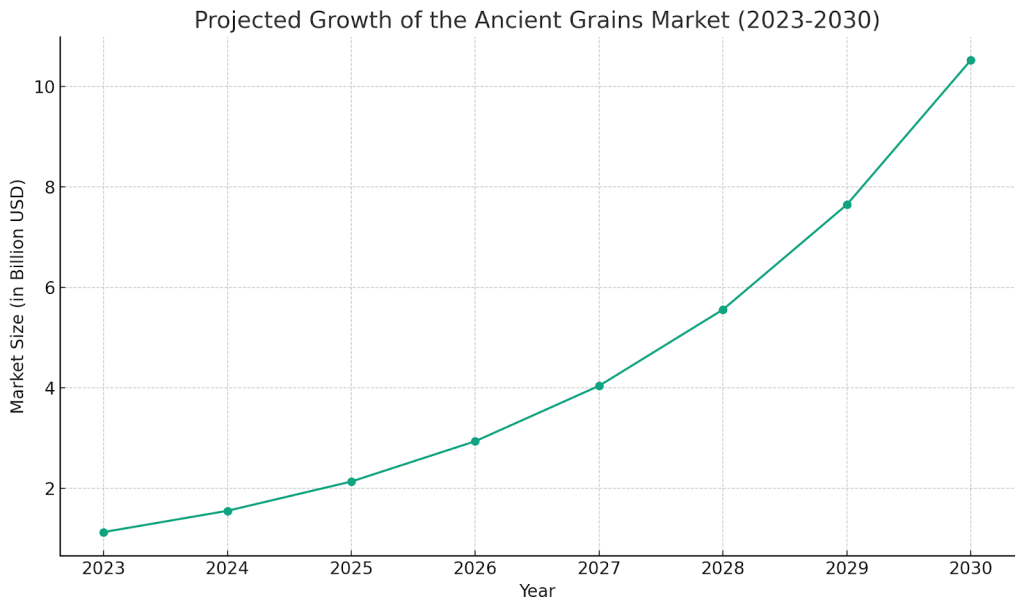
The agricultural sector is witnessing a remarkable resurgence in ancient grains, a trend vividly captured in our latest graph depicting their market growth from 2023 to 2030. Projected to reach a staggering $10.52 billion by 2030, this market’s explosive growth, at a CAGR of 37.6%, signals a paradigm shift in consumer preferences and food industry practices.
The surge in the ancient grains market is fueled by a confluence of factors: a growing inclination towards natural, healthy foods; the increasing popularity of gluten-free diets; and the rising tide of plant-based and vegan trends. Ancient grains like quinoa, amaranth, and teff, revered for their nutritional value and versatility, are spearheading this movement.
Our graph delineates a clear trajectory of growth, emphasizing the substantial economic potential these grains hold. Investors and stakeholders in the food and agricultural sectors are poised to capitalize on this trend, tapping into a market that aligns with contemporary health and wellness narratives.
As we approach 2030, the ancient grains market is not just an investment opportunity but also a testament to a global shift towards sustainable and nutritious food sources. This graph and accompanying analysis offer a lens into the future, predicting a robust expansion in this sector that resonates with both traditional agricultural practices and modern dietary needs.
FAQs on Ancient Grain Investments
Understanding Market Dynamics and Investment Potential
Investors often inquire about the market dynamics surrounding ancient grains. The demand for these grains is on the rise, driven by growing consumer interest in health and sustainability. This trend indicates a promising market potential, but investors should be aware of the niche nature of these grains and the need for targeted marketing strategies.
Navigating Investment Risks and Rewards
Like any agricultural investment, those in ancient grains come with their own set of risks and rewards. The primary risks involve crop adaptability, market fluctuations, and the challenge of scaling production. However, the rewards can be significant, given the premium price points and growing market demand for ancient grains.
The Impact of Organic and Non-GMO Certifications
Organic and non-GMO certifications significantly impact consumer appeal and market value. These certifications align with the increasing consumer preference for natural, environmentally friendly products, potentially leading to higher market prices and consumer loyalty.
Success Stories in Ancient Grain Investments
A Flourishing Quinoa Farm in the Andes
One notable success story is a quinoa farm in the Andes, which thrived by leveraging the grain’s native climate to produce a superior product. The farm’s focus on sustainable practices and high-quality production helped them tap into international markets, demonstrating the global appeal of well-cultivated ancient grains.
Transforming Agriculture with Teff in Ethiopia
Another inspiring case is an investment in teff farming in Ethiopia. By introducing improved cultivation techniques and expanding market access, the investment not only boosted local economies but also positioned teff on the world stage, showcasing the potential of ancient grains to transform traditional agriculture.
In conclusion, ancient grains present a unique opportunity to diversify agricultural portfolios with products that resonate with modern consumer trends towards health and sustainability. Their rich history, combined with their nutritional and environmental benefits, positions them as a smart choice for investors looking to venture into a sector with both traditional roots and contemporary appeal. As the global community continues to seek more sustainable and health-conscious food options, ancient grains stand out as not just a relic of the past, but as a beacon for the future of agriculture. Investors embracing these grains are not only tapping into a profitable market but are also contributing to a more sustainable and nutritionally rich global food landscape.