

In the vast expanse of the global agricultural landscape, olive oil stands out as a lucrative and esteemed product, often referred to as ‘liquid gold.’ The global olive oil market is witnessing a remarkable growth trajectory, propelled by increasing health consciousness among consumers and a growing appreciation for culinary excellence. This surge in demand is significantly impacting both the agricultural and food industries, creating a cascade of opportunities for investors, farmers, and entrepreneurs alike.
The burgeoning demand for olive oil is reshaping agricultural practices, with an increasing number of regions embracing olive cultivation. This shift is not just limited to traditional olive-growing countries but is also evident in non-traditional areas exploring olive production. In the food industry, the demand for olive oil is influencing product development, menu creations, and even marketing strategies, as consumers increasingly seek out healthier and more sophisticated food options.
The Rich History and Modern Appeal of Olive Oil
Olive Oil: A Cultural and Historical Treasure
Olive oil’s significance stretches far back into history, deeply rooted in various cultures around the Mediterranean and beyond. For centuries, it has been a symbol of prosperity, health, and culinary artistry. From ancient civilizations valuing it for medicinal and religious purposes to its role in the Mediterranean diet, olive oil’s cultural and historical impact is profound and enduring.
The Health Trend Driving Quality Demand
In recent times, the modern appeal of olive oil is largely driven by its health benefits. Rich in monounsaturated fats, antioxidants, and anti-inflammatory properties, olive oil is a cornerstone of the health-conscious consumer’s diet. This heightened awareness is fueling a demand for high-quality, extra-virgin olive oil, known for its purity, taste, and nutritional value.
Entering the Olive Oil Market
Navigating the Lucrative Olive Oil Industry
Entering the olive oil market is an exciting venture that requires strategic planning and a deep understanding of the industry. It begins with comprehensive market research to grasp the current trends, consumer preferences, and the competitive landscape. This foundational step is crucial in identifying which segments of the market – be it organic, artisanal, or specialty olive oils – hold the most promise for growth and profitability.
Sourcing and Production: The Cornerstones of Quality
The journey from tree to bottle is pivotal in the olive oil business. The essence of producing top-tier olive oil lies in the quality of the olives. Forming strong connections with olive growers or investing in olive cultivation can ensure a steady supply of high-quality olives. The next critical phase is production and processing. Prospective investors and business owners must decide whether to invest in existing processing facilities or to establish new operations. Factors such as location, technology, and processing capacity play significant roles in this decision.
Branding, Marketing, and Distribution: The Art of Selling Olive Oil
Creating a successful olive oil brand transcends beyond just producing quality oil; it’s about telling a story that resonates with consumers. Developing a compelling brand identity and an effective marketing strategy can significantly impact the product’s market reception. The narrative of the olive oil’s origin, its unique qualities, and how it complements the consumer’s lifestyle can be potent selling points.
Equally important is establishing efficient distribution channels. This could involve forging partnerships with food retailers, exploring direct online sales strategies, or tapping into niche markets like gourmet food stores and health-conscious consumer segments. The distribution strategy should align with the brand’s identity and target market, ensuring that the olive oil reaches the right consumers in the most effective way.
In embarking on this venture, it’s essential to blend tradition with innovation, quality with storytelling, and production excellence with market savvy. The olive oil market, rich in history and ripe with opportunity, awaits those ready to dive into its depths and emerge with ‘liquid gold’.
Top 5 Trends Shaping the Olive Oil Industry
1. Embracing Artisanal and Organic
The olive oil industry is witnessing a significant shift towards artisanal and organic products. Consumers are increasingly seeking olive oils that are not only pure and high-quality but also produced using sustainable and organic farming practices. This trend reflects a broader movement towards health-conscious eating and ethical consumerism.
2. Technological Advancements in Production
Innovation in production and processing technology is revolutionizing the olive oil industry. From modern extraction techniques that preserve flavor and nutritional value to sophisticated bottling processes, technology is elevating the quality and efficiency of olive oil production.
3. New Frontiers in Olive Oil Markets
There’s an expanding interest in olive oil in regions where it was previously not a staple. This expansion is opening up new markets and opportunities for producers, particularly in Asia and North America, where the appreciation for olive oil’s health benefits and culinary versatility is growing.
4. Climate Change and Olive Cultivation
Climate change poses both challenges and opportunities for the olive oil industry. Changes in weather patterns are affecting traditional olive-growing regions, prompting the industry to adapt through innovative cultivation practices and exploring new regions suitable for olive cultivation.
5. The Rise of Exotic and Flavored Olive Oils
There’s a growing consumer interest in exotic and flavored olive oils, which offer unique taste experiences. Infused with herbs, spices, or citrus, these olive oils are gaining popularity for their culinary versatility and appeal to adventurous palates.
The Future of Olive Oil Investing
Navigating Future Prospects and Challenges
Industry experts are optimistic about the long-term prospects of the olive oil market, citing the ever-growing demand for healthier food options and the culinary appeal of olive oil. However, they also acknowledge challenges, including market saturation and the need for consistent quality standards.
Sustainability and Ethics: Core Industry Pillars
Sustainability and ethical practices are increasingly becoming core pillars in the olive oil industry. Experts emphasize that the future of olive oil investing will heavily rely on sustainable cultivation methods, ethical sourcing, and transparent supply chains. These practices not only appeal to the environmentally conscious consumer but also ensure the long-term viability of olive oil production.
Adapting to Consumer Trends and Global Challenges
The industry must continue to adapt to evolving consumer trends, such as the demand for specialty and artisanal products. Additionally, responding to global challenges like climate change with resilience and innovation is crucial. The use of technology in mitigating the effects of climate change on olive cultivation and exploring new growing regions are seen as pivotal strategies.
The Ethical Responsibility of Investors
Investors in the olive oil market are encouraged to consider the broader impact of their investments. Supporting practices that promote environmental sustainability and ethical labor practices is not just a moral imperative but also a strategic business decision. Ethical and sustainable practices can enhance brand reputation, consumer loyalty, and ultimately, profitability.
The olive oil industry is at an exciting crossroads, with significant opportunities for growth and innovation. For investors and stakeholders, understanding these trends and aligning with ethical and sustainable practices will be key to success in this evolving market. The future of olive oil investing lies in balancing tradition with innovation, quality with sustainability, and market demands with ethical responsibilities.
Expanding Horizons: Global Olive Oil Market Growth Forecast (2023-2030)
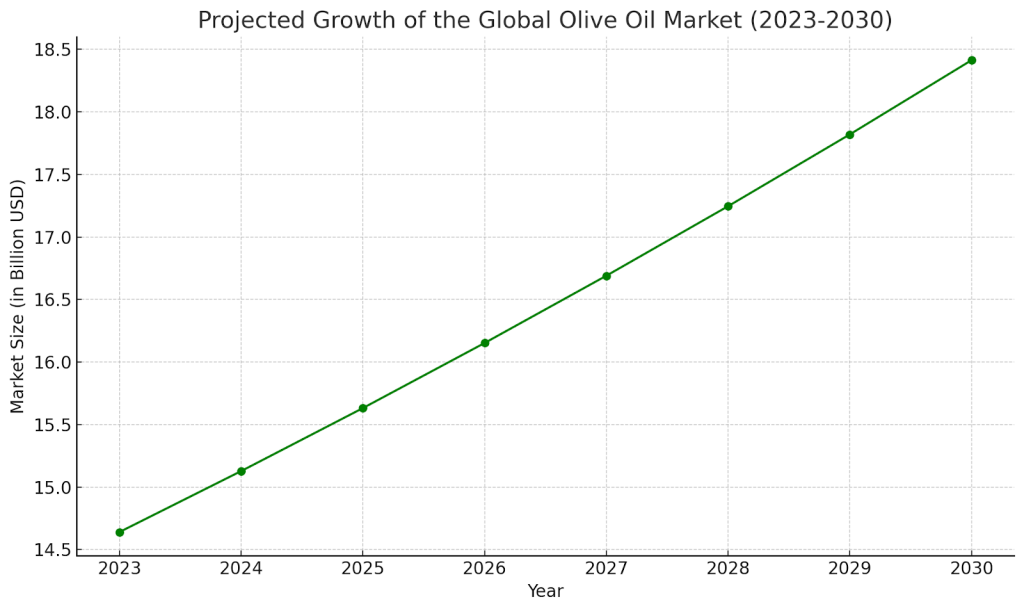
The global olive oil industry, revered as ‘liquid gold’, is set for substantial growth, as illustrated in our recent graph. Projected to expand from $14.64 billion in 2023 to $18.42 billion by 2030, with a CAGR of 3.33%, this market mirrors the rising health consciousness and culinary diversity influencing consumer choices worldwide.
Our graph paints a vivid picture of this expansion, underscoring olive oil’s increasing role in the health and wellness narrative. This growth trajectory is not just numerical; it embodies the evolving global palate, embracing olive oil for its health benefits, rich flavors, and versatility in cooking.
The trend reflects a shift in agricultural practices, with more regions adopting olive cultivation, diversifying from traditional olive-growing areas. In the food industry, olive oil’s demand influences product development, culinary innovations, and marketing strategies, as it becomes a staple in health-conscious and sophisticated diets.
This comprehensive overview and the accompanying graph serve as a roadmap for investors, farmers, and entrepreneurs, offering insights into future directions and opportunities for growth and sustainability in the olive oil market.
FAQs on Olive Oil Investment
How do market dynamics and profitability interplay in the olive oil industry?
The olive oil market is expanding due to rising global demand, especially for high-quality, artisanal, and organic oils. However, this growth is subject to market fluctuations influenced by factors such as climate, international trade policies, and regional production trends, all of which can impact market prices and availability. Investors need to be aware of these dynamics to make informed decisions.
What are the risks and rewards associated with olive oil investing?
Olive oil investing carries certain risks, including environmental factors that can affect crop yields, market volatility, and the challenge of maintaining high quality standards. Despite these risks, the potential rewards are noteworthy. Premium olive oils, known for their quality and distinct characteristics, often command high prices, and the market has shown a consistent growth pattern, offering lucrative opportunities for investors.
How important are global trade and quality standards in the olive oil market?
Global trade and adherence to quality standards are crucial in the olive oil industry. These factors significantly impact market access and consumer trust. For instance, certifications like the Protected Designation of Origin (PDO) are important as they guarantee the quality and origin of the olive oil, enhancing a brand’s competitiveness in the global market. Understanding and complying with these standards is essential for success in the international olive oil market.
In conclusion, investing in the olive oil market presents a unique opportunity to be part of a sector that combines tradition with modernity and quality with sustainability. While navigating this market requires an understanding of its complexities, from global trade dynamics to evolving consumer preferences, the potential for growth and profitability remains significant. As global demand for high-quality olive oil continues to rise, investors who are well-informed and strategically positioned can effectively capitalize on this ‘liquid gold’ rush, contributing to a market that not only offers financial returns but also supports sustainable and ethical agricultural practices.