
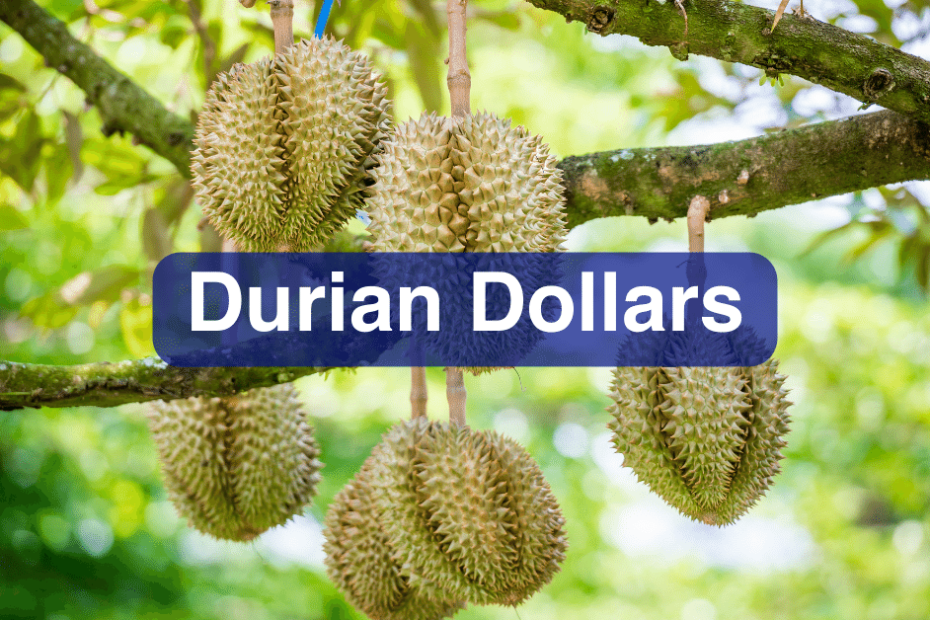
Venturing into the durian industry represents a tantalizing investment opportunity that marries the allure of high demand with the thrill of navigating its controversial reputation. Known as the “King of Fruits,” durian stands out not just for its formidable spiky exterior and pungent aroma, but for its unique position in the market as a commodity that evokes strong emotions and loyalty among consumers. This dichotomy makes durian a fascinating subject for investors looking to tap into the burgeoning market for exotic fruits.
The durian fruit, with its polarizing scent and flavor, holds a place of cultural significance and culinary esteem, particularly in Southeast Asia. Its nutritional value, coupled with its status as a delicacy, has propelled it into the spotlight on a global scale, sparking curiosity and increasing demand in new markets. This growing interest presents a lucrative opportunity for savvy investors. However, the durian market is not without its intricacies. The fruit’s cultivation and distribution are influenced by a variety of factors, from environmental conditions to market dynamics, making it a challenging yet potentially rewarding venture.
This article aims to peel back the layers of the durian market, offering potential investors a comprehensive guide to the opportunities and challenges that lie within. From understanding the unique market dynamics that drive durian demand to navigating the complexities of its cultivation, this piece seeks to equip investors with the knowledge needed to make informed decisions. We will explore the agricultural hurdles, the potential for market expansion, and the innovative strategies that can be employed to ensure success in the world of durian investment. Join us as we delve into the fascinating world of “Durian Dollars,” and uncover how to cultivate prosperity by investing in the world’s most controversial fruit.
The Durian Market: Opportunities and Challenges
Understanding Market Dynamics
The global demand for durian is on an upward trajectory, fueled by its rising popularity among consumers seeking exotic and novel foods. Key markets in Asia, particularly China, have shown a voracious appetite for this fruit, driven by its perceived health benefits and status symbol. Social media has played a pivotal role in amplifying durian’s appeal, with viral videos and testimonials spreading its fame far beyond its native shores. This surge in interest has opened new avenues for export, particularly from countries like Thailand and Malaysia, which are major producers of durian. However, tapping into this demand requires a deep understanding of consumer preferences, seasonal fluctuations, and the logistics of international trade.
Navigating Challenges in Durian Cultivation
Cultivating durian comes with its set of unique challenges, necessitating a careful approach to farming. The tree’s sensitivity to environmental conditions means that successful cultivation is largely confined to specific regions that can mimic its native tropical habitat. Additionally, durian trees are known for their long maturation period, with fruit-bearing typically starting from the fifth to seventh year, posing a test of patience and long-term planning for investors. Pest management and disease control are also critical factors that can impact yield and quality. These agricultural challenges underscore the importance of thorough research, planning, and the adoption of best practices in durian farming to minimize risks and maximize returns.
Investment Opportunities
Despite the hurdles, the durian market brims with opportunities for those willing to navigate its complexities. Direct cultivation offers investors a chance to tap into the premium segment of the market, particularly with varieties like Musang King, which command higher prices. Additionally, the development of value-added durian products, such as freeze-dried durian, durian paste, and even durian-flavored confectioneries, presents new revenue streams and market expansion possibilities. Distribution channels also offer lucrative investment opportunities, especially in leveraging e-commerce platforms to reach global consumers. With strategic planning and innovative approaches, investing in the durian industry can yield substantial rewards, making it an enticing proposition for those looking to diversify their agricultural portfolio.
Strategies for Successful Durian Investment
Investing in the durian industry requires a nuanced approach that balances market demand with sustainable practices and innovative technologies. Here’s a comprehensive guide to navigating this lucrative yet challenging market.
Identifying Profitable Niches
The durian market is diverse, with several niches that offer unique opportunities for investment. Premium-grade durians, such as the Musang King, command higher prices and are in demand both locally and internationally. Organic durians cater to a growing segment of health-conscious consumers looking for pesticide-free fruits. Durian-based products, including desserts, snacks, and even cosmetics, open additional revenue streams beyond fresh fruit sales. To capitalize on these niches, investors should conduct thorough market research to understand consumer preferences, explore certification processes for organic produce, and develop marketing strategies that highlight the unique qualities of their products.
Sustainable Farming Practices
Sustainability is key to the long-term success of any agricultural venture, and durian farming is no exception. Adopting environmentally friendly cultivation practices not only ensures the health of the land but also appeals to eco-conscious consumers. This includes implementing organic farming methods, conserving water through efficient irrigation systems, and practicing integrated pest management to reduce chemical use. By promoting biodiversity and soil health, investors can ensure their durian farms remain productive for years to come, safeguarding their investment against environmental degradation.
Innovation in Cultivation and Distribution
Technological advancements are revolutionizing the durian industry, making it possible to increase efficiency and profitability. Precision agriculture tools, such as soil sensors and drone imagery, can optimize water usage and monitor crop health, leading to improved yields. Innovations in harvesting and post-harvest handling, like mechanized pickers and controlled ripening chambers, ensure that fruits reach the market in peak condition. On the distribution side, e-commerce platforms and blockchain technology offer new ways to connect with consumers and ensure traceability from farm to table. By embracing these innovations, durian investors can stay ahead of the competition and tap into global markets.
The Durian Market: A Segmental Overview
A Fruitful Investment Landscape
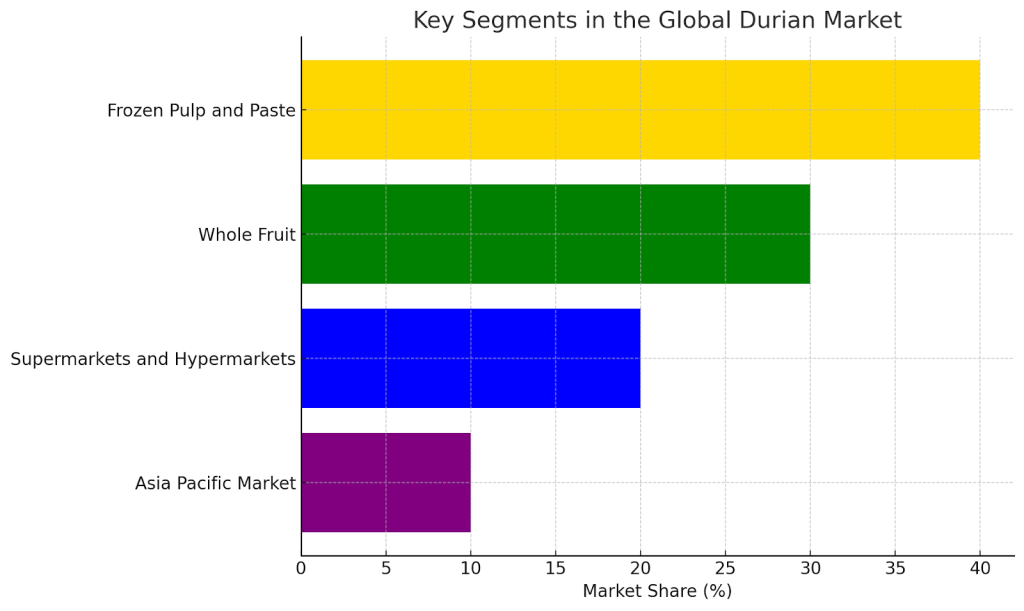
The global durian market’s dynamics unveil a promising avenue for investors eyeing the agricultural sector, particularly in exotic fruits. The market’s segmentation reveals frozen pulp and paste as the frontrunner, a testament to the fruit’s adaptability in meeting consumer preferences for convenience and versatility. This segment’s prominence is pivotal for the food industry, where durian is increasingly incorporated into a myriad of products, enriching the culinary landscape with its distinctive flavor.
Whole Fruit’s Enduring Appeal
The whole fruit segment remains significant, driven by purists who seek the authentic durian experience. This preference underscores the cultural and culinary esteem durian enjoys in its native regions and its growing allure globally. The appeal of whole durian, despite its challenging exterior and pungent aroma, speaks volumes about its unique position in the market — a delicacy that commands both attention and respect.
Distribution Dynamics
Supermarkets and hypermarkets emerge as the primary distribution channels, reflecting durian’s transition from a niche to a more mainstream market presence. This shift is crucial for accessibility, allowing a broader consumer base to explore durian’s unique offering. The role of these retail giants in the durian market’s expansion cannot be understated, as they bridge the gap between traditional consumption and global curiosity.
Asia Pacific’s Market Dominance
The Asia Pacific region’s dominance in the durian market is unsurprising, given its historical and cultural ties to the fruit. However, its leading position also highlights the region’s capability to meet the soaring global demand, leveraging both its agricultural heritage and technological advancements. The Asia Pacific’s contribution to the durian market is a cornerstone of its growth, setting the pace for consumption trends and market expansion.
Navigating the Durian Investment Terrain
Investing in the durian market presents a multifaceted opportunity — one that requires an in-depth understanding of its segments and consumer dynamics. The frozen pulp and paste segment, with its broad application in the food industry, offers a lucrative entry point for investors looking to capitalize on durian’s growing popularity. Meanwhile, the whole fruit market caters to traditionalists and connoisseurs, offering a premium niche for those seeking authenticity.
Strategic investments in distribution channels, particularly in supermarkets and hypermarkets, can further enhance market reach, making durian accessible to a global audience. Furthermore, leveraging the Asia Pacific’s production strengths can provide a competitive edge, tapping into established cultivation expertise and emerging market trends.
The durian market’s complexity, characterized by its segmented demand and regional dominance, presents a ripe opportunity for strategic investment. By aligning with market dynamics and consumer preferences, investors can navigate the intricacies of the durian industry, unlocking its potential for substantial returns while contributing to the global appreciation of this “King of Fruits.
Top 5 Innovations Transforming the Durian Industry
The durian industry is ripe with innovation, from cultivation to distribution. Here are the top five technological breakthroughs shaping its future.
Overview of Innovations
- Precision Agriculture: The adoption of precision farming technologies is enabling durian farmers to monitor and manage their crops more efficiently. GPS-guided machinery, soil moisture sensors, and aerial drones provide data-driven insights that optimize resource use and increase yield.
- Cold Chain Logistics: Advances in cold chain logistics have revolutionized how durians are stored and transported. By maintaining a consistent temperature from farm to market, these technologies extend the shelf life of durians, reducing waste and preserving quality.
- E-commerce Platforms: Online marketplaces and direct-to-consumer platforms are opening new sales channels for durian producers. By leveraging the power of the internet, farmers can reach a wider audience, including international markets previously inaccessible due to distribution challenges.
- Controlled Ripening Technology: Innovations in ripening technology allow for better control over the durian maturation process, ensuring that fruits reach consumers at the perfect stage of ripeness. This technology enhances the consumer experience and reduces the risk of spoilage.
- Blockchain for Traceability: Implementing blockchain technology in the durian supply chain enhances transparency and builds trust with consumers. By providing a tamper-proof record of a durian’s journey from farm to table, blockchain technology ensures the authenticity and quality of the produce.
Impact on the Industry
These innovations are not just improving operational efficiency; they’re also making the durian industry more sustainable and profitable. By increasing yield, extending shelf life, and reaching new markets, technological advancements are creating unprecedented opportunities for investors. Furthermore, by enhancing traceability and consumer trust, these innovations are setting new standards for quality and sustainability in the durian market.
Investing in the durian industry presents a unique opportunity to tap into a growing market with high demand. By focusing on profitable niches, adopting sustainable practices, and leveraging technological innovations, investors can cultivate success in the world of durian farming. As the industry continues to evolve, staying informed and adaptable will be key to reaping the rewards of durian investment.
The Future of Durian Investment
Redefining Agri-Investment
The landscape of agricultural investment is witnessing a pivotal shift, particularly within the durian sector. As consumer demand for this “King of Fruits” escalates globally, the approach to investing in durian farming is rapidly evolving, emphasizing sustainability, market expansion, and consumer preferences adaptation. This evolution is driven by a growing awareness of environmental concerns and a demand for ethical, sustainable agricultural practices. Investors are now looking beyond short-term gains, focusing on long-term sustainability and resilience. They are exploring innovative farming techniques, such as organic farming and integrated pest management, to reduce environmental impact and meet the market’s demand for eco-friendly products.
The Role of Investors and Farmers
In the burgeoning durian market, investors and farmers share a crucial responsibility in fostering an industry that is not only profitable but also sustainable and ethical. Investors bring the necessary capital and resources to adopt advanced agricultural technologies, while farmers contribute their invaluable knowledge and experience in durian cultivation. This partnership is essential for driving innovation in the sector, from implementing sustainable farming practices to exploring new markets and developing value-added durian products. Together, investors and farmers can ensure the durian industry grows in a manner that is environmentally sustainable, socially responsible, and economically viable, catering to the sophisticated preferences of a global consumer base.
FAQs: Investing in Durian Farming
What is the initial investment required for durian farming?
The initial investment for durian farming can vary widely depending on the scale, location, and farming practices adopted. It typically includes costs for land, saplings, irrigation systems, and infrastructure for post-harvest handling. Conducting detailed financial planning and market analysis is crucial to understanding the capital requirements.
What is the typical return on investment for durian farming?
The ROI for durian farming depends on several factors, including the variety of durian cultivated, the scale of operation, and market conditions. Premium varieties like Musang King can offer higher returns due to their demand in both local and international markets. However, investors should be prepared for the long-term nature of the investment, as durian trees take several years to mature and produce fruit.
How do I start a durian farm?
Starting a durian farm involves thorough research and planning. Key steps include selecting a suitable location with the right climatic conditions, choosing high-quality durian varieties, understanding the cultivation requirements, and implementing best practices for soil management and pest control. Securing partnerships with experienced farmers or agricultural consultants can also provide valuable insights.
What are the major risks involved in durian farming?
Key risks include climatic vulnerabilities, pest and disease outbreaks, fluctuating market prices, and operational challenges. Diversifying durian varieties, implementing integrated pest management, and adopting resilient farming practices can help mitigate these risks.
Expert Advice
Prospective investors should conduct comprehensive market research to identify trends and opportunities in the durian market. Exploring partnership opportunities with experienced durian farmers and considering investments in sustainable farming technologies are recommended. Additionally, understanding the regulatory landscape and export requirements is crucial for tapping into international markets. Risk management strategies, including insurance and diversification, are essential for protecting the investment.
In Conclusion
The journey into durian investment offers a unique blend of challenges and opportunities. By embracing innovative, sustainable practices in cultivation and distribution, investors can unlock the full potential of the durian market. The future of durian investment hinges on the industry’s ability to adapt to evolving market demands, prioritize environmental sustainability, and foster ethical practices. As we delve into this venture, the collaboration between investors and farmers will be paramount in shaping a durian industry that is not only profitable but also responsible and forward-thinking. For those poised to enter the world of durian farming, the time is ripe to embrace the opportunities that lie ahead, armed with informed decision-making and a commitment to sustainability and innovation.