
In recent years, the craft beverage industry has witnessed a remarkable resurgence of cider, a beverage steeped in history yet freshly appealing to modern palates. This resurgence is not merely a trend but a significant movement contributing to the broader craft beverage boom. Consumers’ growing appetite for diverse and unique flavors has positioned cider at the forefront of this revolution, making it a drink of choice for many seeking quality, taste, and innovation.
The cider market has experienced substantial growth, marked by increased consumer demand and an impressive diversification of cider products. This growth is not confined to traditional apple ciders; the market now embraces a wide array of flavors and styles, from pear to cherry and beyond, catering to an ever-expanding audience. This diversification has been key to attracting a broader consumer base, thereby fueling the market’s expansion. With cideries innovating and experimenting with new blends, techniques, and flavors, the cider industry is thriving more than ever before.
This article aims to delve into the core of the cider resurgence, exploring the myriad factors driving its popularity among today’s consumers. From examining the evolving tastes and preferences of the craft beverage enthusiast to highlighting the innovative approaches of cider makers, this exploration seeks to uncover how to successfully tap into this burgeoning market. Additionally, the future outlook of the cider industry will be discussed, offering insights into potential growth opportunities and challenges that lie ahead.
The Craft Cider Revolution
Market Growth and Trends
The craft cider revolution is underpinned by notable market growth, with consumer trends rapidly evolving. As more individuals seek out artisanal and craft beverages, cider has seen a surge in popularity, reflecting a broader shift towards products that offer distinct flavors, local sourcing, and authentic experiences. This trend towards craft cider consumption is supported by an increasing desire for beverages that are not only enjoyable but also align with consumers’ values, such as sustainability and transparency in production. The cider market’s expansion is further evidenced by the rising number of cideries opening across the globe, each bringing its unique take on this traditional beverage.
Key Players in the Cider Industry
The dynamic cider industry is home to a diverse range of key players, from small, family-run orchards to innovative craft cideries pushing the boundaries of flavor and technique. Brands like Angry Orchard, Woodchuck, and Strongbow have become household names, offering accessible cider options to the mass market. Meanwhile, artisanal producers such as Virtue Cider, Eden Specialty Ciders, and Farnum Hill are gaining recognition for their commitment to quality, use of traditional methods, and exploration of unique apple varieties. These key players exemplify the industry’s range, showcasing everything from classic styles to experimental brews that challenge and expand the perception of what cider can be.
The Appeal of Cider
Cider’s appeal lies in its remarkable versatility and rich flavor profiles, which cater to a wide spectrum of tastes. Unlike many other alcoholic beverages, cider can range from bone-dry to sweetly succulent, offering something for everyone. Its gluten-free nature also makes it a popular choice among those with dietary restrictions, further broadening its appeal. Moreover, cider’s deep historical roots and the artisanal craftsmanship involved in its production resonate with consumers seeking authenticity and a connection to tradition. This unique combination of factors has cemented cider’s place in the craft beverage landscape, making it a beloved choice for enthusiasts and newcomers alike.
Exploring the craft cider boom: Trends, challenges, and strategies
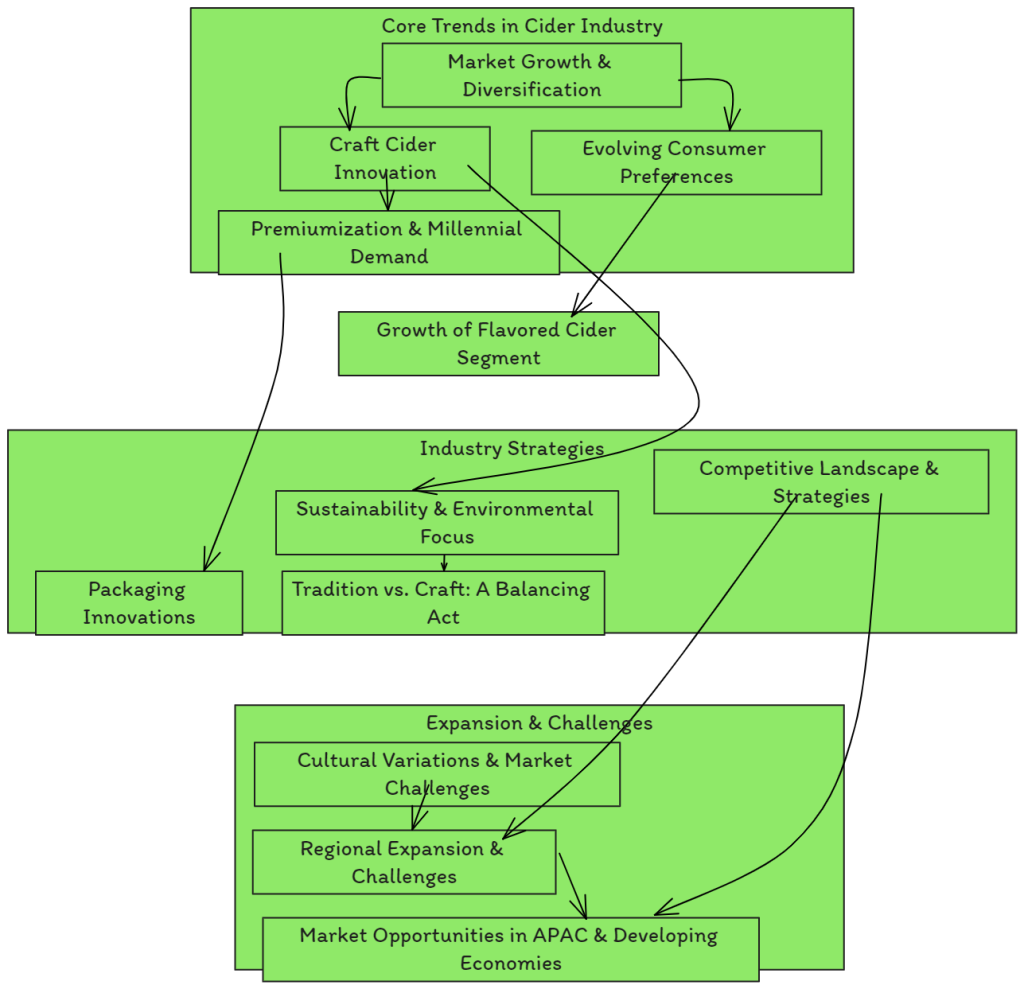
The craft cider industry is experiencing a dynamic evolution, fueled by market growth, diversification, and the evolving preferences of consumers. The diagram “Craft Cider Industry Dynamics” captures the essence of this transformation, illustrating the core trends, expansion challenges, and strategic maneuvers shaping the sector. Key to this revolution is the innovation in craft cider production, where artisans experiment with flavors and sustainability practices to cater to the premiumization trend driven by millennials’ demand for quality and authenticity. Regional expansion faces its set of challenges, from cultural variations to market accessibility, yet opens up new opportunities in the Asia-Pacific and other developing economies. The competitive landscape is marked by strategies that emphasize differentiation, such as unique packaging innovations and balancing the rich tradition of cider making with modern craft techniques. This holistic view underscores the craft cider industry’s vibrant future, characterized by its adaptability and relentless pursuit of excellence.
Starting Your Own Cidery
Understanding the Basics
The journey into cider making begins with a foundational understanding of its process, which is both an art and a science. Selecting the right types of apples is the first critical step; not all apples are created equal when it comes to cider. Varieties range from sweet to sharp, each contributing different flavors to the final product. The art of blending different types of apples or even pears can create complex, sophisticated profiles. After crushing and pressing the fruit to extract the juice, fermentation is the next major phase. This is where the natural sugars in the juice are converted into alcohol by yeasts, a process that can vary in time and technique depending on the desired outcome. Temperature control, hygiene, and patience are key factors in successful fermentation, leading to a delightful array of cider styles from still to sparkling, dry to sweet.
Setting Up Your Cidery
Starting a cidery requires careful planning and attention to detail. The initial step involves securing the appropriate equipment, which may include apple crushers, presses, fermentation tanks, and bottling lines, depending on the scale of operation. Obtaining the necessary licenses is another crucial aspect, as regulations vary by location and involve both production and sales of alcoholic beverages. Choosing the right location is also strategic; it should support the operational needs of production while also considering the potential for a tasting room or direct sales to consumers. Understanding local market demand and accessibility for distribution channels will significantly impact the success of the cidery.
Marketing Your Cider
Creating a compelling brand and effective marketing strategy is essential in standing out in the crowded craft beverage market. Branding that tells a story, reflects the quality of the product, and resonates with the target audience can create a loyal customer base. Digital marketing, social media presence, and engagement strategies are critical for building awareness and driving interest. Additionally, participating in local and regional craft beverage events, competitions, and festivals can help introduce the brand to a wider audience. Collaboration with local businesses and creating unique tasting experiences at the cidery can also enhance visibility and attract visitors.
Top 5 Trends in Cider Making
1. Innovative Flavors and Ingredients
The cider industry is experiencing a wave of innovation, with cider makers experimenting with a variety of flavors and ingredients that challenge traditional perceptions of cider. From adding herbs, spices, and hops to incorporating exotic fruits and berries, these creative endeavors are captivating the market. Seasonal releases and limited edition batches often feature unique combinations, enticing consumers with new taste experiences. This trend not only showcases the versatility of cider but also appeals to a broader audience, including craft beer enthusiasts looking for something different.
2. Sustainability Practices
Eco-friendly practices are becoming increasingly important in cider production, reflecting a growing consumer demand for sustainable and ethically produced beverages. Many cideries are implementing organic farming techniques, minimizing water usage, and reducing energy consumption. Recycling apple pomace, the solid residue left after pressing, for animal feed or compost, and using renewable energy sources are examples of how the industry is embracing sustainability. These practices not only benefit the environment but also resonate with consumers who prioritize sustainability in their purchasing decisions.
3. Collaborations and Cross-Pollination
Collaborations between cideries and other craft beverage producers are fostering a culture of innovation and community within the industry. By partnering with breweries, wineries, and even distilleries, cider makers are creating unique hybrid beverages that blur the lines between categories. These collaborations often result in limited-edition releases that generate excitement and anticipation among consumers. Cross-pollination of ideas and techniques enriches the craft beverage community, encouraging experimentation and pushing the boundaries of traditional cider making.
4. Packaging Innovations
Creative packaging is playing a pivotal role in attracting consumer attention and differentiating products on the shelf. From sleek, modern can designs to elegant bottles that evoke traditional cider heritage, packaging is an integral part of the brand experience. Innovative labeling, including storytelling elements and detailed information about the cider’s origin and apple varieties, adds value and engages consumers. Sustainable packaging options, such as recyclable materials and reduced packaging waste, are also gaining traction, aligning with consumer values around environmental responsibility.
5. Focus on Heritage and Tradition
Amidst the innovation, there’s a growing appreciation for the heritage and tradition of cider making. Many cider makers are turning to historical apple varieties and reviving traditional production methods to create ciders that reflect the beverage’s rich history. The use of wild fermentation, barrel aging, and the pursuit of terroir-specific ciders connects consumers with the past while offering a distinct, authentic taste experience. This focus on heritage not only celebrates the roots of cider making but also offers a counterpoint to the industry’s more experimental trends, providing something for every palate.
The Future of Cider in the Craft Beverage Market
The Role of Technology
Technological advancements are significantly influencing the cider industry, revolutionizing how cider is produced, distributed, and marketed. Modern fermentation techniques, precision agriculture, and data analytics are just a few examples of how technology is enhancing the efficiency and quality of cider production. Digital platforms and social media are transforming marketing strategies, allowing cideries to connect with their audience more effectively. E-commerce solutions are also expanding distribution channels, making it easier for consumers to discover and purchase a wider variety of ciders. As technology continues to evolve, its role in shaping the future of the cider market is undeniable, offering exciting possibilities for innovation and growth.
Regulatory Landscape and Challenges
Navigating the regulatory landscape remains a significant challenge for the cider industry. Varying state and federal laws regarding production, labeling, and distribution create a complex environment for cideries to operate within. Taxation laws, which differentiate between cider, wine, and beer based on alcohol content and carbonation levels, can also impact profitability and pricing strategies. Despite these challenges, many cider makers are finding success by staying informed, engaging with regulatory bodies, and advocating for more supportive policies. Collaboration within the industry is crucial for addressing these regulatory challenges and promoting a thriving market for craft cider.
Predictions and Opportunities
The future of cider in the craft beverage market is bright, with several trends and opportunities on the horizon. The consumer’s desire for authentic, locally-sourced, and sustainably-produced beverages continues to drive innovation in cider making. The exploration of new flavors, apple varieties, and blending techniques is likely to continue, catering to an increasingly adventurous consumer palate. Furthermore, the integration of technology in production and marketing strategies presents opportunities for cideries to reach new audiences and expand their market presence. As the industry continues to evolve, the potential for cider to carve out a significant niche within the craft beverage market is substantial.
FAQs: Navigating the Cider Business
Is Cider Making a Profitable Venture?
Yes, cider making can be a profitable venture, particularly as demand for craft beverages grows. Success in the cider business requires a strategic approach to production, marketing, and distribution. Understanding the market, creating a unique product, and efficiently managing costs are key factors in achieving profitability. As with any business, there are risks involved, but with careful planning and a commitment to quality, cideries can find financial success.
What Are the Key Challenges in Cider Production?
Cider production faces several challenges, including managing the variability of apple crops, navigating the complex regulatory environment, and competing in a crowded market. Ensuring consistent quality while scaling up production can also be a challenge for cider makers. Addressing these challenges requires a combination of technical knowledge, creative problem-solving, and strategic business planning.
How Can I Make My Cidery Stand Out in a Crowded Market?
To stand out in the crowded cider market, focus on creating a unique brand identity, producing high-quality and innovative ciders, and building a strong connection with your target audience. Differentiation can come from using unique apple varieties, experimenting with flavors, and highlighting the story behind your cidery. Engaging marketing strategies and creating memorable customer experiences can also set your brand apart.
What Are the Best Apples for Cider Making?
The best apples for cider making depend on the style of cider you wish to produce. Traditional European ciders often use bittersweet and bittersharp apple varieties, which are less common in the United States. However, many American cider makers successfully use a blend of culinary and heirloom varieties to create their desired flavor profiles. Experimentation and blending different types of apples can lead to unique and complex ciders.
In Conclusion
Exploring the dynamic world of cider reveals a craft beverage sector that is rich with opportunity and innovation. From the role of technology in advancing cider production and distribution to navigating regulatory landscapes and seizing market opportunities, the cider industry is poised for continued growth. Addressing common questions underscores the practical aspects of entering and succeeding in the cider business, highlighting profitability, challenges, differentiation strategies, and the importance of apple selection. Reflecting on these discussions reinforces the potential for success within the cider market, emphasizing that strategic approaches to crafting high-quality ciders, embracing innovation, and understanding consumer trends are essential for a thriving future in the craft beverage boom.