
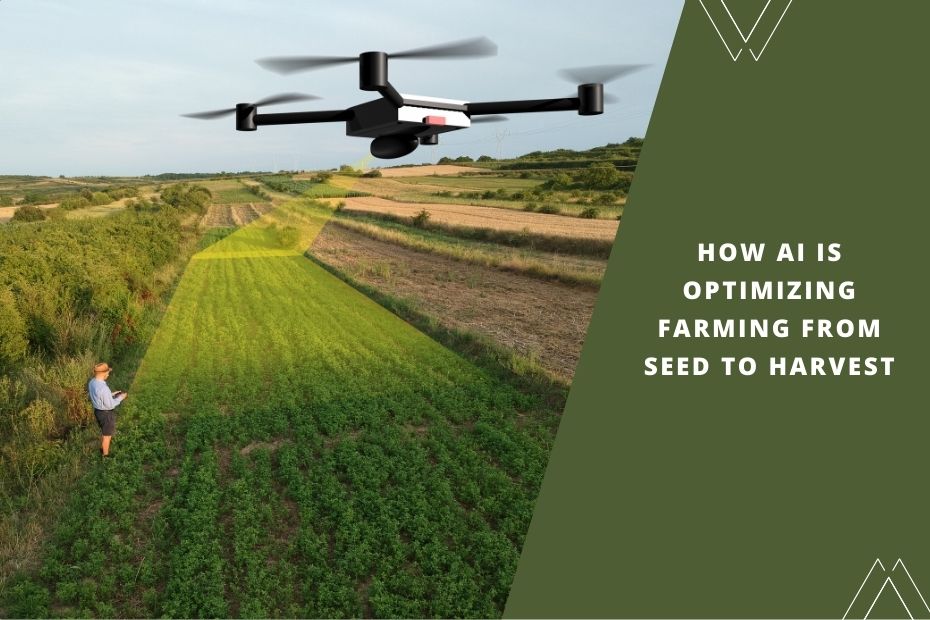
Artificial intelligence (AI) is redefining modern farming, making it more precise, efficient, and sustainable. I’ve spent years working with farmers and agribusinesses, and I’ve seen firsthand how AI is not just an add-on but a necessity for meeting the growing demands of food production. AI-powered solutions are changing how seeds are planted, crops are monitored, and harvests are managed, providing data-driven insights that help farmers make better decisions every step of the way. It’s no longer just about working harder—it’s about working smarter. AI-driven tools reduce waste, optimize resources, and increase yields, ensuring that farms stay profitable while protecting the environment.
Precision Planting: Getting the Best Start
Planting might seem straightforward, but how and where seeds are placed has a huge impact on crop success. Traditional methods often lead to uneven spacing and wasted seeds, but AI is fixing that problem with precision planting systems. I’ve worked with farmers who’ve switched to AI-powered planters, and the difference is incredible. These machines adjust seed depth, spacing, and placement in real time, ensuring that every seed has the best possible conditions for growth.
AI-enabled planters use soil mapping, moisture analysis, and GPS tracking to determine the optimal planting strategy for each section of a field. Some systems even modify seed density based on real-time soil fertility data, increasing the number of plants in high-nutrient zones while reducing it in poorer areas. This improves germination rates and maximizes yield potential without wasting seeds.
Soil Health Monitoring: Keeping Fields Productive
Soil health is one of the biggest factors in long-term farm success. I’ve seen farms struggle due to poor soil management, often because farmers didn’t have accurate data on their soil conditions. AI-powered soil sensors change the game completely by providing continuous real-time data on moisture levels, pH balance, and nutrient content.
Instead of guessing how much fertilizer or water is needed, AI systems give precise recommendations on where and how much to apply. Farmers I’ve worked with have reduced fertilizer waste by up to 30% just by following AI-generated insights. This not only saves money but also prevents over-fertilization, which can harm both crops and the surrounding environment. AI-driven soil health tracking is helping farmers adopt more sustainable practices while keeping their fields productive year after year.
Irrigation Management: Smarter Water Use
Water management is a constant struggle, especially in drought-prone areas. Many farmers overwater their fields out of caution, but AI helps strike the perfect balance between water conservation and crop health. I’ve seen farms using AI-powered irrigation systems cut water usage by up to 50% while maintaining—or even increasing—crop yields.
These systems analyze weather forecasts, soil moisture levels, and plant growth stages to determine exactly when and how much to irrigate. Some even adjust irrigation schedules automatically, preventing water waste while ensuring crops receive the moisture they need. AI-driven irrigation is not just about saving water—it’s about making sure every drop is used efficiently to grow healthier, stronger plants.
Pest and Disease Detection: Catching Problems Early
One of the biggest challenges in farming is detecting pests and diseases before they spread. I’ve seen entire crops lost because infestations weren’t spotted in time. AI-powered drones and imaging systems are changing this by scanning fields and identifying problems long before the human eye can detect them.
These drones use machine learning and image recognition to spot early signs of pest infestations, fungal infections, or nutrient deficiencies. I’ve worked with farmers who’ve received AI-generated alerts about an issue in their fields, allowing them to apply targeted treatments before the problem got out of hand. This reduces pesticide use, lowers costs, and prevents widespread crop damage.
AI is also being trained to recognize specific pests and diseases by analyzing global agricultural data. Instead of guessing which treatment to use, farmers can receive instant AI-driven recommendations for the best course of action, cutting down on trial and error.
Autonomous Machinery: Reducing Labor Costs, Increasing Productivity
Labor shortages are a growing issue in agriculture, but AI-driven machines are filling the gap. I’ve worked with farms that have completely automated tasks like planting, weeding, and harvesting, reducing labor costs while increasing efficiency.
AI-powered tractors, robotic weeders, and autonomous harvesters work around the clock, making farm operations more consistent and less reliant on human labor. Self-driving tractors plant seeds with extreme precision, robotic weeders distinguish between crops and weeds, and AI-driven harvesters pick only ripe produce, reducing waste and improving quality.
One of the most impressive innovations is AI-driven mechanical weed control. Instead of spraying entire fields with herbicides, AI-powered robots identify and remove weeds individually, either mechanically or with targeted herbicide application. This dramatically reduces chemical use while keeping crops healthy.
Yield Prediction: Planning for a More Profitable Harvest
Farming has always been unpredictable, but AI is making it more predictable than ever. AI-driven yield forecasting tools analyze weather patterns, soil health, crop growth, and historical data to estimate how much a farm will produce. Farmers who use these tools can plan storage, logistics, and pricing strategies in advance, reducing waste and maximizing profits.
I’ve seen farmers secure better sales contracts and pricing deals simply because they had AI-generated forecasts that gave them a competitive edge. These predictions also help prevent food waste by ensuring that markets are prepared for incoming supply, rather than dealing with last-minute surpluses or shortages.
Supply Chain Optimization: Getting Crops to Market Faster
AI isn’t just helping farmers—it’s improving the entire agricultural supply chain. AI-driven logistics platforms analyze demand trends, transportation routes, and storage conditions to ensure that crops reach their destination efficiently.
Farms that use AI in their supply chain planning can reduce spoilage, lower transportation costs, and deliver fresher products to consumers. Some AI systems even match farmers directly with buyers, streamlining sales and removing unnecessary middlemen. By optimizing storage, shipping, and pricing, AI is making food supply chains faster, smarter, and more profitable.
How AI Enhances Farming Efficiency
- Precision planting improves seed placement and reduces waste.
- AI-driven soil monitoring optimizes fertilization and irrigation.
- Automated irrigation systems conserve water while ensuring crop health.
- Drones and AI detect pests and diseases before they spread.
- Autonomous tractors, harvesters, and weeders reduce labor costs.
In Conclusion
AI is changing farming at every stage, from planting to harvesting. The ability to collect, analyze, and apply data-driven decisions is making farms more efficient, more productive, and more sustainable. AI-powered solutions improve planting precision, optimize resource use, automate labor-intensive tasks, and enhance supply chain management. Farmers who embrace AI-driven innovations are positioning themselves for long-term success in an industry that is rapidly becoming more data-driven. AI isn’t just the future of farming—it’s the present, and it’s here to stay.
“AI is transforming farming from seed to harvest! Discover how precision planting, smart irrigation, and AI-driven automation are making agriculture more efficient and sustainable. Follow me on Instagram for more insights!”