
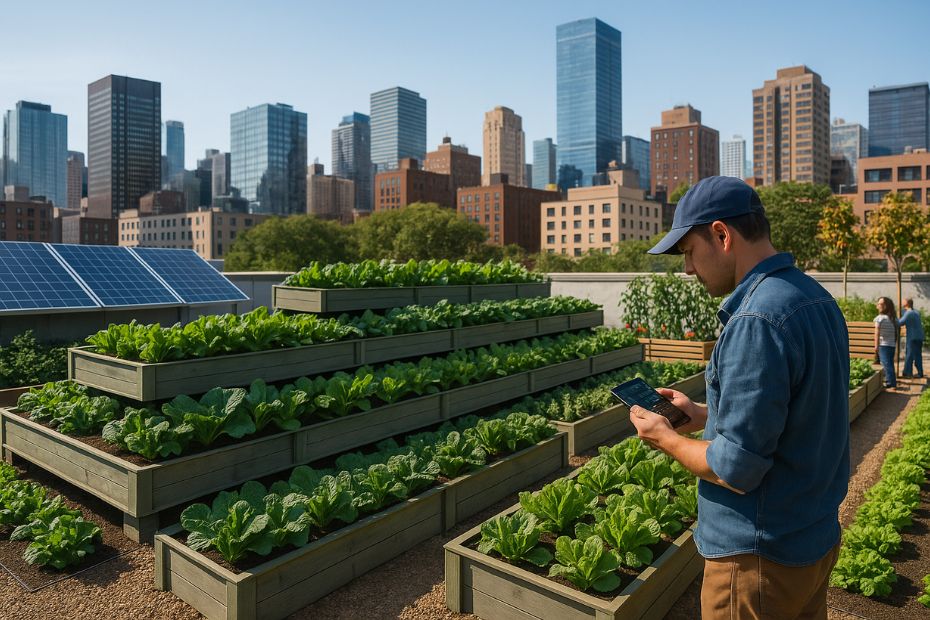
If you’re considering ways to grow food efficiently within city limits, you’ve likely come across urban farming and vertical gardens as headline solutions. These models promise to bring agriculture closer to the consumer, slash transport emissions, and reclaim underutilized urban spaces. But you also know that not every innovation lives up to the buzz. This article explores the real-world viability of these systems—what they offer, where they fall short, and how you can separate scalable solutions from marketing hype.
You’re Growing Food Where It’s Needed Most
Urban farming lets you tackle one of agriculture’s oldest problems—proximity to consumers. Whether you’re setting up rooftop gardens, hydroponic walls, or container farms, you’re shortening the distance between farm and fork. That makes freshness a major selling point and significantly reduces post-harvest losses. In areas with food deserts, you’re not just feeding a market—you’re serving a need.
With vertical systems, you can multiply growing area without needing more land. You stack your greens instead of spreading them. You can grow leafy vegetables, herbs, and microgreens efficiently in places where land costs would otherwise kill the economics of traditional farming.
It Works—But Only When You Know the Limits
You can’t ignore the constraints. Vertical gardens aren’t great for root vegetables or grains. The energy requirements for controlled-environment farming can eat into your margins fast, especially if you’re using artificial lighting and HVAC. You’re also looking at high capital costs upfront—shelving, pumps, climate controls, and nutrient systems aren’t cheap.
If you’re relying on these models for large-scale staple crop production, you’ll run into diminishing returns. But for specialty crops in urban centers with premium demand? That’s where you can carve out a profitable niche.
You Can Compete on Freshness and Consistency
Urban agriculture gives you full control over growing conditions. When you’re operating in a closed system, you’re not subject to late frosts, unexpected downpours, or insect swarms. You decide when to plant, irrigate, harvest—and you can deliver on a consistent schedule. That’s gold when you’re working with chefs, grocery stores, or direct-to-consumer models.
Freshness also becomes a marketing lever. You can harvest basil at 9 a.m. and deliver it before noon to a customer three blocks away. That kind of shelf life and quality is tough to beat, especially when your competitors are shipping produce in from 1,500 miles out.
Water Use Is Where You Win Big
Water efficiency is one of the most underappreciated advantages of urban and vertical farming. Hydroponic and aeroponic systems use up to 90% less water than conventional field agriculture. In cities where water costs are high or resources are scarce, that’s a serious edge. You recirculate, reuse, and optimize down to the plant level, cutting your costs and your footprint at the same time.
This efficiency also makes your operation more scalable indoors. If you’re leasing warehouse space or operating inside converted shipping containers, you’re not losing water to runoff or evaporation, and you can track every liter used with precision.
Labor and Technology Go Hand in Hand
Urban farming isn’t low-tech. You’re running pumps, sensors, lighting systems, and possibly climate controls. If you’re managing a vertical setup, automation becomes your ally. Conveyor systems, robotic arms, and app-connected controls can keep your workflow lean while expanding capacity. But you need someone who understands how to calibrate EC levels, manage disease risk in dense plantings, and troubleshoot technical glitches.
That’s why your team matters. Whether you’re hiring urban ag specialists or training up from the community, skill development will make or break your consistency and profitability.
Profit Isn’t Guaranteed—But It’s Possible
If you’re looking at unit economics, vertical and urban farms aren’t guaranteed profit centers. You’ll need strong demand, premium pricing, and streamlined operations. The biggest success stories—like Gotham Greens and Infarm—combine direct distribution, branding, and efficiency at scale. You can’t just build a high-tech system and expect the margins to appear.
Where you do find profitability is in crops with high turnover, strong local demand, and minimal post-harvest processing. Baby greens, herbs, edible flowers, and microgreens tend to dominate because they yield quickly and sell at premium prices. Try to grow tomatoes or cucumbers at scale indoors, and your energy bill will crush your margins unless you have a niche or a co-located buyer.
It’s Not Just Farming—It’s Infrastructure
Urban farming isn’t just about growing food; it’s about integrating agriculture into the built environment. You’re installing systems on rooftops, in basements, on balconies, or in old factories. That means you’re also contributing to stormwater management, insulation, and community cooling in concrete-heavy areas.
When you link your work to food security, climate resilience, and local employment, you make your farm part of the city’s sustainability toolkit. That opens doors to partnerships, grants, and long-term leases that pure commercial models may never access.
What Makes Urban Farming Work?
- Grows food close to consumers
- Offers freshness and shorter supply chains
- Uses less water with hydroponics
- Ideal for high-value, fast-turnover crops
- Best suited for leafy greens and herbs
In Conclusion
Urban farming and vertical gardens aren’t one-size-fits-all answers to food security, but they’re far more than hype. When you understand the economics, choose the right crops, and lean into their strengths—water savings, freshness, and proximity—you can build a system that works. Whether you’re feeding your neighborhood, selling to restaurants, or running a commercial operation, these techniques give you a new set of tools to grow smarter in the city. The success comes when you treat it as more than a trend—when you operate it like the business it is.