
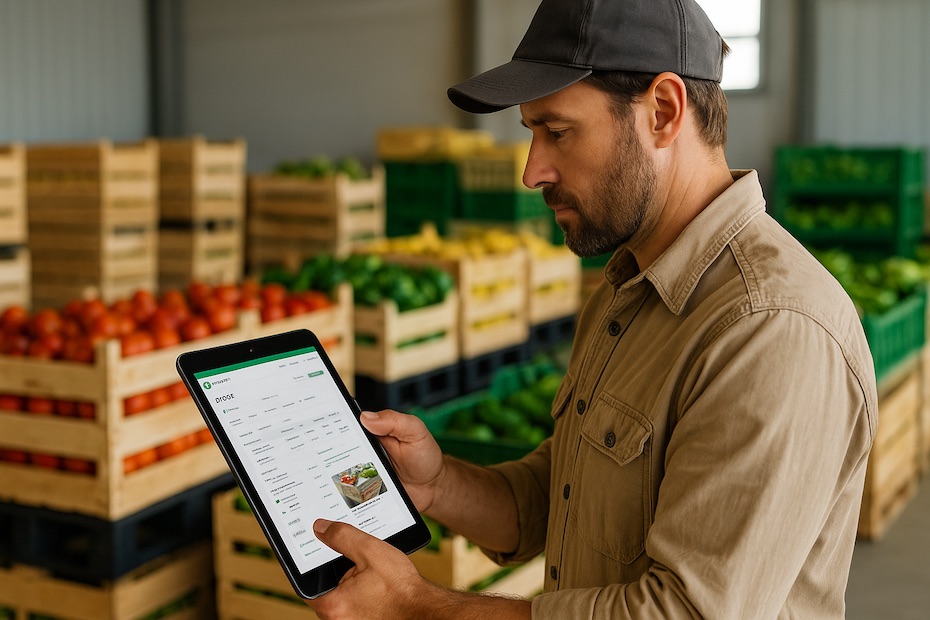
You can move your farm’s produce sales online seamlessly with Local Line, a farm-focused e-commerce platform designed to simplify how you sell, manage, and deliver fresh produce directly to customers. It gives you a complete digital toolkit — from order processing and subscription management to payments and logistics. By implementing Local Line, you can grow your business efficiently, reduce waste, and maintain control over every sale while expanding beyond the farmers’ market.
What Is Local Line and How Does It Work?
When you use Local Line, you’re not just setting up a storefront — you’re building a direct, digital sales channel that puts you in charge. Unlike generic e-commerce platforms, Local Line is specifically engineered for farmers, food hubs, and local producers. It allows you to list produce by weight, volume, or package and manage complex orders in real time. Every feature is tailored to your workflow, from harvest tracking to customer invoicing.
You manage all operations through a unified dashboard. You’ll see exactly what’s in stock, what’s selling fast, and what needs replenishing. The platform automates updates, so when an item sells out, it’s reflected instantly online. This prevents overbooking and helps maintain accuracy in your supply records. It also integrates customer data and purchasing habits, allowing you to forecast demand with more confidence.
The platform’s value lies in its simplicity — everything happens in one system. You control your prices, delivery schedules, and payment options. It removes dependence on third-party marketplaces that take a cut of your profits or control customer relationships. Local Line ensures that your farm’s brand remains front and center, whether you’re serving a handful of local households or a roster of wholesale buyers.
How Can Local Line Improve Your Sales Efficiency?
Selling fresh produce involves balancing perishability with precise timing. Without automation, that balance often collapses under paperwork, phone calls, and missed connections. Local Line eliminates that burden by handling repetitive administrative work automatically. Orders, invoices, and payments are generated instantly, which means fewer delays, fewer errors, and a smoother experience for both you and your customers.
You also gain the ability to sell 24/7 without adding hours to your schedule. Customers can browse your inventory online, select products, and pay directly through your store. You can review daily orders each morning and schedule deliveries more efficiently. With less manual coordination, you can dedicate more attention to quality control, fieldwork, or marketing initiatives that drive higher margins.
Many farms using Local Line report measurable gains in productivity and sales volume. One Ontario vegetable producer increased direct-to-consumer sales by 30% within three months of implementation. By sending out automated availability updates to their mailing list, they captured more consistent weekly orders and reduced spoilage. That’s the kind of operational precision you achieve when digital tools match real agricultural workflows.
What Makes Local Line Different from Other Online Platforms?
The difference lies in ownership and specialization. Local Line was designed from the ground up for producers who want to retain control. You own your customer relationships, set your own pricing, and manage your own delivery zones. There are no commissions or hidden fees — just a straightforward subscription model that supports your autonomy and profit margins.
Generic e-commerce systems like Shopify or WooCommerce can handle transactions, but they weren’t built for farms. They don’t support units sold by weight, bulk pricing, or variable inventory based on harvest yield. Local Line bridges that gap. It supports product variations, seasonal availability, and customer segmentation so you can cater to wholesalers, CSA members, and individual consumers simultaneously.
Beyond structure, Local Line integrates seamlessly with how agriculture operates. You can track field data, delivery routes, and even packaging preferences. It turns the unpredictable rhythm of fresh produce sales into a predictable, data-driven system. By using a platform that understands your industry, you spend less time adjusting your process to fit the software — and more time letting the software fit your process.
How Should You Set Up Local Line for Maximum Efficiency?
Your success with Local Line depends on clear planning and consistent management. Start by preparing your catalog with complete information — product names, varieties, units, and pricing. This clarity ensures that customers understand exactly what they’re buying, reducing confusion and post-sale adjustments. Upload your inventory using the platform’s templates, then customize your storefront to reflect your farm’s identity.
When configuring pricing, separate retail and wholesale lists. Local Line allows you to assign customer types and permissions, so each buyer sees only the products relevant to them. Set your delivery schedules and order cutoffs with discipline. Customers value predictability, and consistent order windows make it easier to manage your harvest and logistics.
Before you go live, run internal tests. Place sample orders, check notifications, and simulate delivery routes. This lets you catch errors early and fine-tune the customer experience. Once launched, track your metrics regularly — order frequency, average purchase size, and on-time deliveries. Those numbers show how well your digital channel performs and where improvements can deliver immediate payoffs.
Which Features Deliver the Greatest Value?
The features that offer the highest returns are those that directly reduce manual labor and improve cash flow. Subscription management is one. If you run a CSA or recurring delivery program, Local Line automates renewals, invoices, and notifications. Customers receive reminders and updates automatically, so you can focus on operations instead of billing cycles.
Another major feature is order routing and delivery optimization. You can map deliveries based on location and time, cutting fuel costs and trip duration. Farms using this feature have reported logistics savings of up to 25%. Real-time order tracking ensures that no box is left behind, and automated confirmations reduce back-and-forth communication with buyers.
Finally, reporting and analytics give you visibility into profitability. You can see which products sell fastest, which customers spend the most, and which delivery days generate the best margins. Over time, those insights help refine your production schedule and marketing efforts. Instead of guessing what works, you’ll know — and you can scale your success with data-backed confidence.
What Common Challenges Should You Expect During Implementation?
Every digital transition comes with learning curves, and Local Line is no exception. The first challenge you might face is data preparation. Uploading incomplete or inconsistent inventory data can lead to errors in pricing and availability. To avoid this, take the time to standardize your item descriptions, categories, and units before import.
The second challenge involves customer onboarding. Some of your existing buyers may not be used to ordering online. Start with clear communication — email tutorials, quick-start guides, or personal phone calls to walk them through their first order. When customers feel supported, adoption rates increase dramatically.
Lastly, don’t overlook internal training. Your team needs to understand how to process orders, update inventory, and troubleshoot issues. Schedule short training sessions before launching publicly. Once everyone’s comfortable with the system, your operations will flow smoothly and confidently. The goal isn’t just using technology — it’s mastering it to build consistency and scalability.
How Are Farmers Using Local Line to Scale Successfully?
Thousands of farms across North America now use Local Line to replace outdated manual processes with a fully digital sales ecosystem. The most successful users started small — a few key products, a pilot customer group — and expanded after they saw measurable success. Gradual implementation ensures that your team and customers adapt comfortably.
A California cooperative of fruit growers uses Local Line to manage orders from multiple farms. Each producer updates their inventory independently, while the cooperative oversees collective logistics and billing. This structure has streamlined coordination across 20 growers, reduced data-entry time by half, and improved delivery accuracy to over 95%.
Individual farms are seeing equally strong results. A small CSA farm in Wisconsin used Local Line to automate its subscription box management. Within six months, it increased revenue stability by 40% due to predictable renewals and reduced churn. Stories like these show that digital adoption isn’t just about convenience — it’s about building reliable systems that sustain long-term profitability.
How does Local Line help farms sell online?
- Creates branded online stores for produce sales
- Manages inventory, subscriptions, and deliveries
- Supports retail, wholesale, and CSA channels
Digitize Your Farm Sales and Expand Your Reach
Transitioning your farm into the digital marketplace is a strategic move that pays dividends in efficiency, reach, and profitability. Local Line gives you the power to run every aspect of your sales from one dashboard — no middlemen, no extra software, and no barriers between you and your customers. Once you set it up, you’ll spend less time on admin and more time cultivating growth.
If you’re ready to build a more resilient and scalable business model, explore Local Line’s potential firsthand. And if you want to learn about other powerful farm tech tools reshaping agriculture, visit my crunchbase to read more of my expert insights and guides designed for forward-thinking farm owners.