
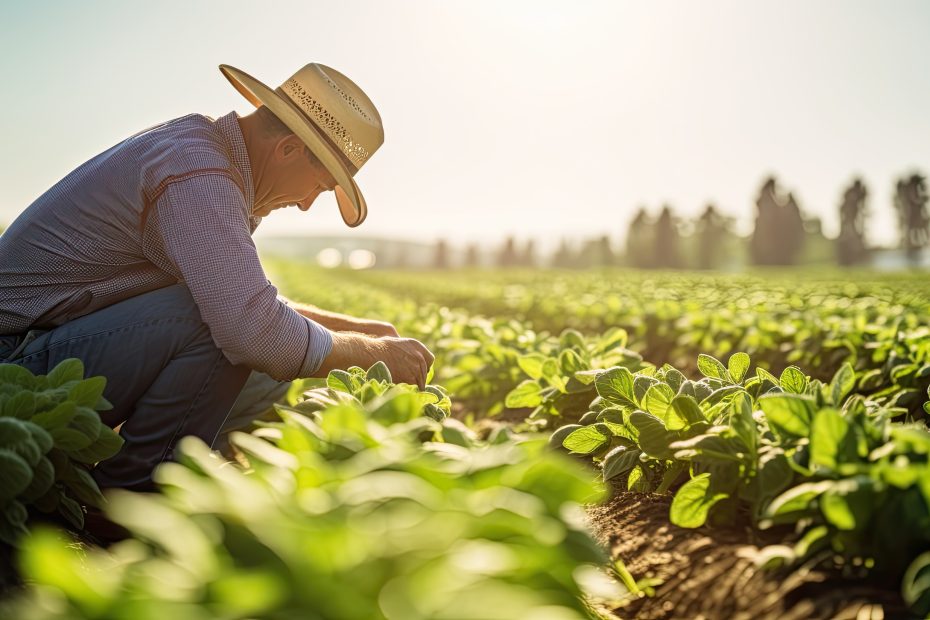
In the verdant fields where tradition meets innovation, today’s agriculture is undergoing a seismic shift. No longer just the domain of plows and patience, the sector is now a hotbed for cutting-edge technology. With the world’s population on an upward trajectory and arable land at a premium, the impetus to revolutionize farming methods has never been greater. From satellite-guided tractors to drones that map and monitor, the agricultural technology landscape is bustling with advancements that are redefining what it means to cultivate the earth.
Yet, in this era of innovation, it’s not technology for technology’s sake that drives the change; it’s the unwavering quest for profitability. The margins in farming are notoriously slim, and the volatility of the market doesn’t do favors for the faint-hearted. Herein lies the crux of agri-tech’s burgeoning importance – as a lever to not only survive but thrive in the modern economy. It’s a compelling story of transformation where the judicious application of innovation is fast becoming the linchpin of profitable farming.
This article isn’t just a cursory glance at what’s new in the barn; it’s an exploration of the very sinews that make up modern farming’s muscular adaptation to the demands of the 21st century. We will delve into the fabric of agri-tech, examining both its warp and weft, and chart the progress from traditional practices to a world bristling with possibilities. Ready your senses, for you’re about to embark on a journey through the revolution in modern farming, an adventure where innovation, efficiency, and profitability grow together in the fertile fields of technology.
Understanding the Agri-Tech Revolution
Defining Agri-Tech and Its Expansive Scope
Agri-tech, at its core, is the harnessing of technology to improve the efficiency, value, and sustainability of agricultural production. It’s not just a single tool but a toolbox, brimming with a myriad of solutions tailored for every imaginable farming challenge. This technology spans the gamut from the development of new crop varieties to the digital and mechanical innovations that support their cultivation and distribution.
Tracing the Historical Context and Technological Evolution in Farming
To appreciate the present, one must understand the past. The evolution of farming technology is a rich tapestry that stretches back to the first seed sown by human hands. This narrative has seen the horse-drawn plow give way to the steam tractor, which in turn stepped aside for the sophisticated machines of today. Each chapter in this history has set the stage for the next, propelling agriculture forward and demonstrating humanity’s relentless ingenuity.
Exploring the Key Drivers of Technological Adoption in Agriculture
What ignites the spark that fuels the agri-tech revolution? It’s a blend of necessity and opportunity – from the pressing need to feed a growing population to the potential to reduce environmental footprints, from the pursuit of precision and productivity to the allure of data’s predictive power. These drivers are as diverse as they are dynamic, each playing a pivotal role in the adoption and integration of new technologies into the very heart of farming.
The Anatomy of Modern Agri-Tech
Delving into the Tools and Machinery at the Forefront
Modern agri-tech is an ensemble cast of tools and machinery, each actor playing a critical role in the agriculture of tomorrow. GPS technology guides autonomous vehicles across fields with pinpoint accuracy, while sensors and scanners gauge soil health and plant vitality. Drones become farmers’ eyes in the sky, and robotics offer hands that toil tirelessly. The tools of the trade are no longer just metal and might but data and insight.
The Pivotal Role of Data Analytics in Precision Farming
Precision farming is data-driven decision-making in its most elegant form. It is where big data meets the soil, turning every aspect of the farm’s operations into a number, a pattern, a decision point. Data analytics in agriculture means predicting the unpredictable, understanding the plant’s needs on a micro-scale, and delivering a macro-impact on yield and efficiency.
The Impact of Biotechnology on Crop Yield and Health
Lastly, we approach the microscopic world of biotechnology, where life itself is the canvas for innovation. Here, biotechnology enhances crop resilience, nutritional value, and yield. It is a world where DNA is edited with precision to coax from nature its maximum bounty, fostering crops that withstand pests, diseases, and the extremes of a changing climate. Biotechnology is not merely an influence on modern farming—it is poised to become its cornerstone.
In every seed of innovation lies the potential for a harvest of profit, and as we explore these concepts further, we realize that agri-tech is not just shaping the future of farming—it is the future.
Integrating Agri-Tech into Your Farming Operations
Assessing Technology Needs for Your Farm
Embarking on the journey of integrating agri-tech begins with a thorough assessment of your farm’s unique needs. The diversity of today’s agriculture demands a customized approach. Start by evaluating your farm’s current operations, pinpointing areas where technology could yield improvements. Is it in crop monitoring, irrigation management, or perhaps in streamlining the supply chain? Consider factors like the scale of your land, the type of crops, and the existing infrastructure. It’s crucial to set clear objectives – whether it’s to increase yield, reduce waste, or improve product quality – to guide your technology choices.
Implementing Technology for Small to Medium-Sized Farms
Contrary to common belief, implementing farming technology is not exclusive to the vast agribusinesses. Small to medium-sized farms can also leverage agri-tech for enhanced productivity and profitability. Start small; perhaps with soil moisture sensors or a basic crop management app. Look for scalable solutions that can grow with your operations. Partnerships with agri-tech companies can provide access to high-tech resources without the overhead of full ownership. The key is incremental integration, ensuring each technological enhancement justifies its cost through tangible returns.
Measuring the Impact of Agri-Tech on Farm Efficiency and Profits
The proof of the pudding is in the eating, and in agri-tech, the proof is in the impact on efficiency and profits. After implementing technology solutions, it’s imperative to track their effects meticulously. Use data analytics to measure changes in yield, resource usage, labor costs, and the quality of output. The impact of agri-tech should be evident not just in the bottom line but also in the sustainability and resilience of your farming practices. Look for improvements in the efficiency of water use, reduction in chemical inputs, and the robustness of your crops against extreme weather events. This is the true measure of agri-tech’s value.
Agri-Tech Innovations to Watch
Top 10 Emerging Agri-Tech Startups and What They Offer
- AeroFarms – Specializing in indoor vertical farming, AeroFarms uses aeroponics and LEDs to grow leafy greens without sunlight or soil.
- AgBiome – This startup is using the plant microbiome to develop products that naturally and effectively control pests and diseases.
- Trace Genomics – Offering soil analysis services, Trace Genomics helps farmers understand their soil’s potential for disease and nutrient deficiencies.
- FarmBot – FarmBot is automating small-scale food production with its open-source CNC farming machinery.
- Benson Hill Biosystems – Leveraging cloud biology, machine learning, and genomics, they aim to enhance crop performance.
- Taranis – Utilizing advanced aerial imagery and machine learning, Taranis provides insights to farmers for precision agriculture practices.
- Bowery Farming – An indoor farming startup that uses robotics, LED lighting, and data analytics to grow produce.
- SwarmFarm Robotics – They build autonomous robots that perform a variety of farming tasks to increase efficiency and reduce reliance on manual labor.
- Root AI – Focused on robotic solutions, Root AI develops intelligent robots that can perform complex tasks, like harvesting crops in greenhouses.
- Indigo Agriculture – Indigo focuses on microbial and digital technologies to improve crop health and productivity while promoting sustainable agricultural practices.
These startups are at the cutting edge of technology and sustainability in agriculture, promising to deliver solutions that can significantly improve farm efficiency, crop yield, and resource management.
Thought Leadership Piece: The Future Farm – Predictions and Trends
Expert Insights on the Trajectory of Agri-Tech
As we stand on the brink of what may be the most transformative period in farming history, expert insights into the trajectory of agri-tech are more valuable than ever. These prognostications aren’t mere crystal ball gazing but are grounded in trends, market analysis, and technological advancements. We tap into the minds of industry experts to glean where agri-tech may take us in the coming years and how farmers can prepare for these changes today.
Sustainable Agri-Tech and Its Role in Future Farming Practices
Sustainability is not just a buzzword; it’s the lifeline of future farming practices. Sustainable agri-tech converges the best of technology with the principles of environmental stewardship and social responsibility. We explore how the integration of renewable energy systems, precision agriculture, and resource-efficient technologies are carving a path towards a greener, more sustainable future for farming.
Anticipating the Next Big Thing in Agri-Tech
Finally, we turn our gaze to the horizon, to anticipate the next big things in agri-tech. With advancements moving at breakneck speed, what seems like science fiction today may be the standard of tomorrow. We’ll delve into the emerging trends that are likely to disrupt the agricultural sector and how they can be harnessed to not just enhance farm profits but also to tackle the grand challenges of food security and climate change. Keep an eye on this space; the future is closer than it appears.
Overcoming Challenges: Agri-Tech Adoption and Optimization
Tackling the Barriers to Adopting New Technologies in Farming
Despite the clear benefits, the road to agri-tech adoption is often fraught with hurdles. Resistance can come in many forms, from the financial cost of new equipment to the intimidating prospect of mastering unfamiliar technology. To effectively tackle these barriers, farmers must be presented with clear, tangible benefits that offset the investment and effort required. Educational initiatives that demonstrate the long-term cost savings and increased yields provided by agri-tech can be persuasive. Furthermore, developing a supportive network that offers technical assistance can alleviate the anxiety associated with these transitions.
Strategies for Optimizing Existing Agri-Tech Investments
Once the hurdle of adoption is cleared, the focus shifts to optimization. Farmers who have already taken the leap are finding that agri-tech is not a ‘set it and forget it’ solution. Regular analysis and fine-tuning of these systems are essential to achieve the maximum return on investment. This can involve data analysis to better understand crop growth patterns, machine learning algorithms to improve pest management, or simply adjusting equipment settings for efficiency. Training programs and ongoing support from agri-tech providers can empower farmers to make these adjustments confidently.
Some FAQs Answered On The Relevant Topic
What Are the Initial Costs Associated with Agri-Tech Adoption?
The initial costs can vary widely depending on the scale and the specific technologies adopted. Smaller-scale technologies like soil moisture sensors might require minimal investment, while larger systems like autonomous tractors could be more significant. However, many agri-tech companies offer financing options and, in some cases, subscription models that can help distribute these costs over time.
How Does Agri-Tech Contribute to Sustainable Farming?
Agri-tech contributes to sustainable farming by enabling more precise application of inputs like water, fertilizers, and pesticides, thereby reducing waste and environmental impact. Technologies like precision farming and AI-driven data analytics can also lead to better soil health and biodiversity by allowing for more targeted farming practices.
Can Agri-Tech Improve the Quality and Quantity of Produce?
Yes, agri-tech can significantly improve both the quality and quantity of produce. Through the use of advanced monitoring and automation, crops can be grown in optimal conditions, leading to not only a higher yield but also improved quality. Technologies like hydroponics and controlled environment agriculture are leading the way in this respect.
What Is the Learning Curve for Farmers New to Technology?
The learning curve can be steep, especially for those who have traditionally not engaged with advanced technology. However, this is being mitigated by user-friendly interfaces and increased accessibility. Many agri-tech companies prioritize customer education, offering extensive training and support to ease the transition.
In conclusion, the journey into agri-tech is a promising venture with the potential to substantially enhance farm profits and lead the agriculture sector into a new era of efficiency and sustainability. This technological horizon beckons with a promise of profitability, necessitating ongoing innovation and the adaptation of farming methods. Embracing this future requires cultivating a culture among farming communities that is tech-savvy and forward-thinking, where continuous learning and adaptation become as natural as the seasons themselves. It is through this synergy of tradition and innovation that the agriculture industry will not only survive but thrive in the face of global challenges.