
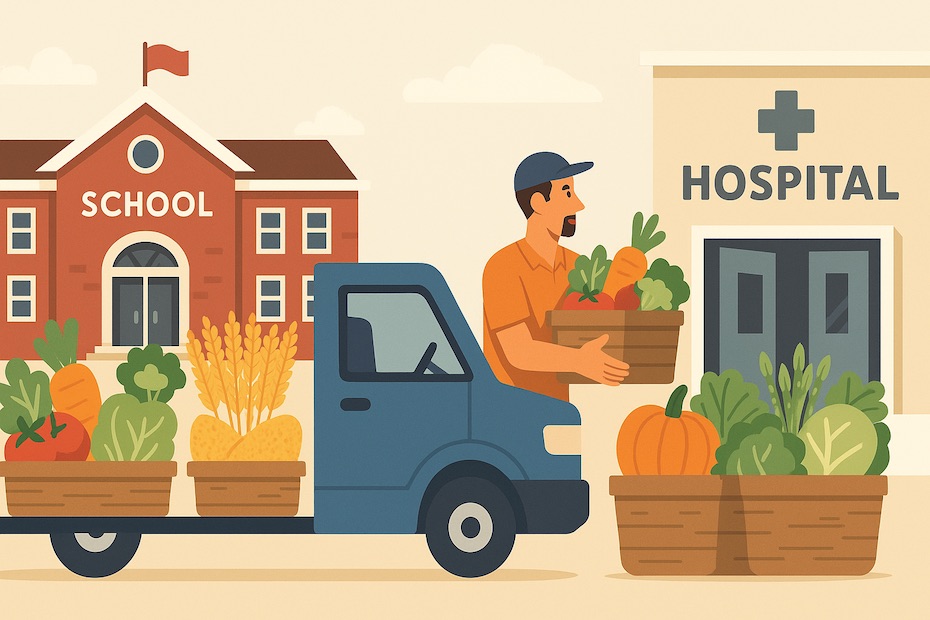
You integrate healthier meals and support regional agriculture by bringing local food directly into institutional kitchens across schools and hospitals.
This article shows how you can implement and scale modern farm-to-institution models. You’ll uncover supply chain structures, funding mechanisms, stakeholder partnerships, and real examples of food systems that benefit health, education, and local economies.
What is farm-to-table 2.0 for institutions?
Farm-to-table 2.0 in institutional settings refers to localized food procurement models tailored for schools, hospitals, and similar large-scale buyers. It connects public meal programs directly to regional farms and food producers, delivering fresh, seasonal ingredients with transparent sourcing.
Unlike consumer-facing farm-to-table dining, this model is about systemic procurement—aligning distributors, education, grants, and kitchen infrastructure. It includes hands-on garden programs in schools and nutrition-driven menus in hospitals. The model helps you serve higher quality meals while reducing dependency on industrial suppliers.
Why should schools source food locally?
You raise student nutrition standards and stimulate local economies when you implement farm-to-school sourcing. Over 28 million U.S. schoolchildren eat lunch at school daily. Fresh, regionally sourced meals improve fruit and vegetable consumption, reduce ultra-processed intake, and support academic outcomes.
Schools also report increased student engagement through garden education and kitchen-based learning. A USDA-funded study found students in farm-to-school districts ate 40% more fruits and vegetables than their peers. For local farmers, institutional contracts provide reliable income streams and predictable seasonal demand.
How are hospitals shifting to local procurement?
Hospitals are shifting toward local sourcing to align meal programs with community health missions. When you procure regionally grown produce, pasture-raised meats, or sustainably harvested grains, you’re reinforcing nutrition-based care. Boston Medical Center’s rooftop farm, for instance, grows up to 6,000 pounds of produce yearly for patient meals and its teaching kitchen.
Institutional buyers like Kaiser Permanente and Providence Health have also committed to sourcing from regional food hubs. Beyond clinical benefits, local procurement reduces carbon impact, increases food traceability, and contributes to equitable food systems.
What barriers limit adoption in institutional settings?
Cost and logistics are the primary constraints. Locally grown food often has higher per-unit costs than bulk commodity products. Small farms may not meet procurement volume requirements or delivery specifications required by foodservice operations. Additionally, kitchen teams need prep time and training for fresh ingredients compared to ready-to-heat processed meals.
You must also manage fragmented supplier relationships, inconsistent seasonal availability, and short shelf lives. These operational challenges require advance planning, grant support, and distributor partnerships. Without infrastructure like cold storage, processing space, or kitchen reconfiguration, the model can stall.
What policy and funding programs support these efforts?
Public and nonprofit funding plays a critical role in institutional farm-to-table models. The USDA’s Local Food Purchase Assistance Program (LFPA) provides federal resources to schools and care institutions sourcing from socially disadvantaged or local producers. Some states like California offer matching grants to offset higher local food costs.
You can also access private sector support through foundations, regional food hubs, or nonprofit alliances like FoodCorps and the National Farm to School Network. Technical assistance, kitchen infrastructure grants, and menu-planning tools all help scale procurement capacity sustainably.
Which models demonstrate best practices?
Several leading programs show what institutional local sourcing looks like in practice:
- Edible Schoolyard Project in Berkeley pioneered classroom gardens and chef-led lunch programs tied to California-grown ingredients. It now supports over 6,000 schools nationwide.
- Boston Medical Center created a 2,658 square-foot rooftop farm supplying patients and the on-site pantry, integrated into dietitian services and community nutrition outreach.
- Bear Lake Schools (Michigan) runs hydroponic growing systems managed by culinary students, generating greens and herbs served daily across school cafeterias.
- Umoⁿhoⁿ Nation School (Nebraska) implements Native-led farm-to-school models focused on traditional foods and decolonized food education, winning recognition from USDA and food justice coalitions.
Key components behind these success stories
- School gardens or urban farm integrations
- Local distributor or co-op partnerships
- Culinary training for foodservice teams
- Direct farmer relationships and contracts
- Nutrition education integrated into curriculum
- State or USDA funding to subsidize procurement
What results can you measure from these programs?
Outcomes include improved student performance, lower food insecurity, increased farmer revenue, and community health benefits. A 2023 USDA report noted farm-to-school programs improved cafeteria participation by 9% and boosted local farm revenue by 30% in some regions.
Hospitals reported patient satisfaction increases linked to fresher, seasonal food. At Boston Medical Center, the rooftop farm supports not only meals but workshops for pregnant patients, diabetes prevention groups, and medical students—integrating food into preventive care models.
How can you launch or scale a local sourcing program?
You begin by identifying your local food supply landscape. Map farmers, co-ops, and food hubs within 100–150 miles. Then assess your institution’s procurement needs: seasonal menu planning, delivery volume, pricing flexibility, and storage.
Build cross-functional teams including foodservice directors, dietitians, local farmers, and education staff. Secure funding through USDA grants or state agriculture departments. Start with a pilot—introduce one seasonal menu per month built entirely from regional food and expand from there.
Monitor outcomes like cost per meal, student participation, health indicators, and farmer revenue. Use this data to build internal advocacy and justify further investment.
Why bring local food to schools and hospitals?
- Enhances meal quality and freshness
- Supports local farms and food security
- Improves nutrition and educational outcomes
- Reduces supply chain emissions
- Creates hands-on learning opportunities
In Conclusion
You create measurable health, economic, and environmental benefits by implementing local food sourcing across schools and hospitals. With the right partnerships, planning, and funding, institutions can transition from commodity-dependent food systems to regional models that nourish people and communities alike. Whether you start with a school garden, a hospital pantry, or a seasonal menu, farm-to-table 2.0 is a replicable path to systemic improvement.
For more stories on sustainable sourcing, institutional food reform, and regional agriculture, visit Facebook.