
The journey of fruit from the soil to the supermarket is a fascinating and highly coordinated process. It combines agricultural expertise, advanced technology, and logistical efficiency to ensure that fresh, high-quality produce reaches consumers worldwide. As someone who has observed this intricate supply chain closely, I’ve seen how each step plays a crucial role in delivering fresh, nutritious fruit to our tables. Let’s take a closer look at the entire process, from cultivation to the moment consumers make their choice at the store.
Cultivation and Harvesting
Every piece of fruit starts with careful cultivation. Farmers select crops based on soil quality, climate conditions, and market demand. Modern farming techniques, such as crop rotation and integrated pest management, are used to maximize yield while minimizing environmental impact. For instance, drip irrigation systems ensure efficient water use, while organic fertilizers enrich the soil sustainably.
Harvesting is a critical stage in this journey. Timing is everything—picking fruit too early can affect flavor and texture, while overripe fruit may spoil quickly. Skilled laborers harvest fruits like apples, oranges, and mangoes by hand to ensure minimal damage. For large-scale operations, mechanized harvesters are employed, particularly for crops like berries and grapes. The goal is to maintain the fruit’s quality from the moment it leaves the tree or vine.
Sorting and Grading
Once harvested, fruits are sent to sorting facilities where they are graded based on size, color, ripeness, and overall quality. This step is essential for ensuring uniformity, which is a key factor for consumer satisfaction. Sorting can be manual or automated, depending on the scale of the operation.
Advanced technologies like optical scanners and artificial intelligence are increasingly being used to detect defects, discoloration, or irregularities that might not be visible to the human eye. Grading systems help categorize the fruit, with premium-quality produce often destined for supermarkets and lower-grade items used for processing into juices, jams, or canned goods.
Packaging for Protection and Sustainability
Proper packaging is crucial to protecting fruit during transport and storage. Packaging materials are selected to provide cushioning, ventilation, and temperature control. For instance, perforated plastic crates are often used to prevent moisture buildup, while cardboard boxes are designed to stack efficiently without crushing the produce.
Sustainability has become a key focus in recent years. Biodegradable and recyclable packaging materials are now widely used to reduce environmental impact. Some companies are even experimenting with edible coatings that can extend the shelf life of fruits without additional packaging.
Cold Chain Logistics: Preserving Freshness
Maintaining freshness during transportation is one of the most challenging aspects of the fruit supply chain. This is where cold chain logistics come into play. From the moment fruit leaves the farm, it is stored and transported at optimal temperatures to prevent spoilage and extend shelf life.
Refrigerated trucks, storage facilities, and shipping containers ensure that the fruit remains at a constant temperature. For example, bananas are typically kept at 56°F to avoid premature ripening, while berries require cooler temperatures around 32°F. Any break in the cold chain can lead to quality degradation, so monitoring systems are employed to track temperature and humidity levels throughout the journey.
Efficient Transportation Systems
Transportation is the backbone of the fruit supply chain, connecting farms to markets across the globe. Depending on the distance and perishability of the fruit, various modes of transportation are used, including trucks, ships, and airplanes. For instance, tropical fruits like pineapples and avocados are often transported by air to ensure they reach markets quickly, while apples and oranges, which have longer shelf lives, are typically shipped by sea.
Logistics planning is critical to minimizing transit times and maintaining quality. Routes are optimized to avoid delays, and specialized packaging ensures that the fruit remains undamaged during transit. The goal is to strike a balance between speed and cost-effectiveness while preserving the fruit’s freshness.
Quality Control and Food Safety
Quality control is an ongoing process throughout the supply chain. At multiple checkpoints, fruits are tested for pesticide residues, microbial contamination, and compliance with food safety standards. For instance, organic produce must meet stringent certification requirements to ensure that it has been grown without synthetic fertilizers or pesticides.
Traceability systems play an essential role in modern fruit markets. Each batch of fruit is tagged with a unique identifier, allowing stakeholders to track its origin, journey, and handling conditions. This is particularly important in the event of a recall, ensuring that affected products can be quickly identified and removed from shelves.
Distribution to Retail Outlets
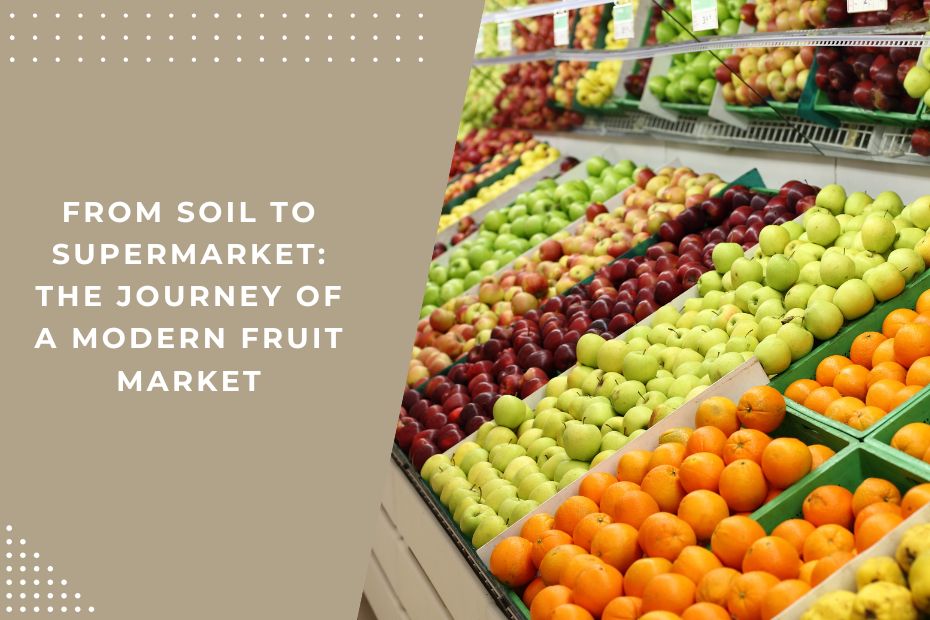
Once fruits pass all quality checks, they are distributed to supermarkets and other retail outlets. Retailers play a key role in maintaining the freshness and visual appeal of the produce. Temperature-controlled display units, proper lighting, and humidity controls are used to create an optimal environment for the fruit.
Retailers also consider consumer preferences when arranging displays. For instance, ripe fruits are often placed in prominent positions to encourage immediate purchases, while less ripe produce is stocked for customers planning to consume it later. Some stores also highlight certifications, such as organic or fair trade labels, to appeal to environmentally and socially conscious shoppers.
The Consumer’s Role in the Journey
The final step in the fruit’s journey is the consumer’s purchase. Consumers make decisions based on appearance, ripeness, and price. Increasingly, they are also considering factors like sustainability and ethical sourcing. Labels indicating organic farming practices or fair trade certification provide assurance that the fruit has been produced responsibly.
Educated consumers can play a significant role in reducing waste. For example, selecting slightly imperfect produce, often sold at a discount, helps prevent food from going to waste. Additionally, proper storage at home—such as keeping bananas at room temperature or refrigerating berries—ensures the fruit remains fresh for longer.
The Journey of Fruit from Soil to Supermarket
- Cultivated and harvested for quality.
- Sorted and graded for uniformity.
- Packaged for protection and sustainability.
- Transported via cold chain logistics to preserve freshness.
- Tested for quality and safety throughout the supply chain.
- Distributed to retail outlets with consumer preferences in mind.
In Conclusion
The journey of fruit from soil to supermarket is a testament to the efficiency and innovation of the modern supply chain. Every step, from careful cultivation to rigorous quality checks and efficient distribution, is designed to deliver fresh, high-quality produce to consumers.
Understanding this journey gives us greater appreciation for the effort and coordination required to bring fruit to our tables. It also highlights the importance of supporting sustainable and ethical practices throughout the supply chain. By making informed choices, both consumers and industry stakeholders can contribute to a more sustainable and efficient fruit market.