
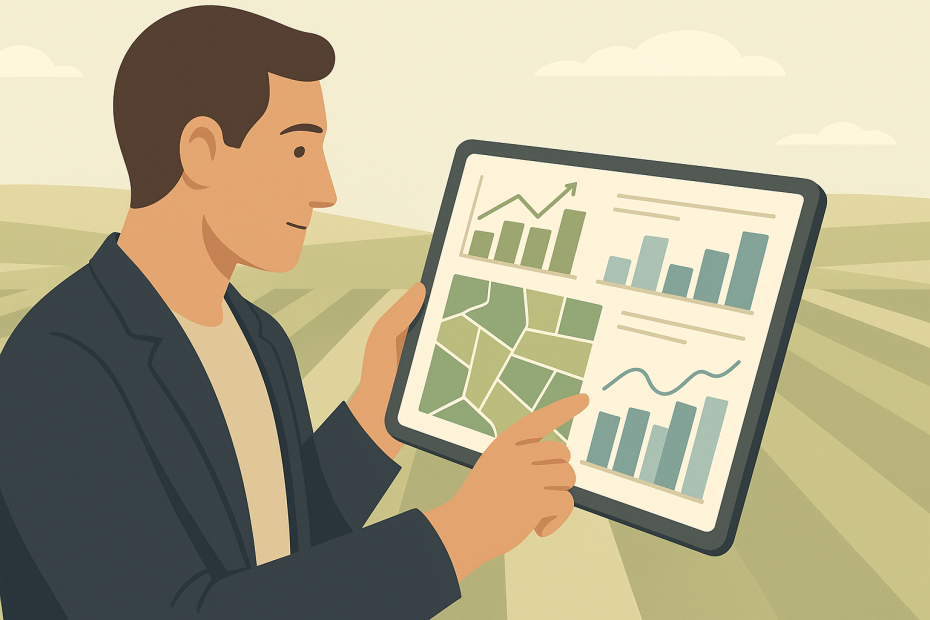
You invest in agriculture by purchasing farmland, leasing it to operators, or gaining exposure through vehicles like REITs, ETFs, and agricultural funds.
This guide equips you with the fundamentals of agriculture investing. You’ll learn about farmland’s performance, investment options, income models, risk factors, and practical steps to get started.
What kind of returns can you expect from farmland?
Farmland historically produces attractive, stable returns. U.S. farmland delivered average annualized returns of about 12% between 1992 and 2016, outperforming equities and commercial real estate.
Returns come from two components: appreciation in land value and income through leases or crop revenue. Compared to volatile markets, farmland acts as a steady asset that combines cash flow with long-term appreciation.
You should also consider inflation protection. As food prices rise, farmland rents and crop revenues tend to rise as well—adding another layer of security.
How can you invest in agriculture without buying land directly?
Owning farmland isn’t your only option. You can diversify through financial products tied to agriculture.
Agricultural REITs, such as Farmland Partners (FPI) and Gladstone Land (LAND), allow you to invest in farmland portfolios through publicly traded shares. ETFs like the VanEck Agribusiness ETF give exposure to agribusiness companies in equipment, seeds, and fertilizer. Mutual funds focusing on agriculture broaden diversification even further.
For commodity exposure, soft futures contracts (corn, wheat, soybeans) provide another indirect method. Each choice comes with unique liquidity and risk profiles, so align them with your overall portfolio strategy.
Why is farmland considered a strong long-term asset?
Farmland holds intrinsic value because of scarcity and essential demand. Global food demand is projected to increase 50% by 2050, yet arable land is shrinking. Scarcity ensures long-term upward pressure on farmland value.
Institutional investors—pension funds, endowments, and corporates—are increasingly buying farmland. This shows confidence in farmland’s stability as an alternative asset. Average returns of around 10–12% with low volatility compare favorably to bonds and equities.
You benefit from farmland’s resilience in downturns. Unlike speculative assets, food demand rarely contracts significantly, making farmland a stabilizing element in a diversified portfolio.
What should you evaluate before buying farmland?
You must perform detailed due diligence before purchasing land. Core factors include:
- Soil quality and fertility – Determines crop yield potential.
- Water access and rights – Critical for irrigation and long-term viability.
- Location and logistics – Proximity to markets, roads, and storage.
- Property taxes and zoning restrictions – Impact net returns.
- Drainage and land improvements – Influence upfront and ongoing costs.
Asking these questions upfront ensures you avoid hidden expenses and poor-performing properties. A rushed purchase often leads to disappointing returns.
How do you generate income from farmland investments?
There are two main income models: leasing or active management.
Under a cash rent lease, you rent land to a farmer for a fixed annual rate, creating predictable income. With a crop share lease, you take a percentage of the harvest revenue—adding upside but more variability.
If you choose active management, you generate revenue directly from crops, but also take on operating risk. Many investors prefer leasing because it balances income with lower involvement. Either way, farmland delivers cash flow alongside land appreciation.
How long should you hold farmland?
Agriculture is a long-term play. Investors often hold row-crop land for 5–10 years, while permanent crops such as orchards or vineyards typically require 10–15 years.
Land values generally increase steadily rather than in short bursts, so you maximize returns by holding through cycles. Short-term flipping of farmland is uncommon and rarely profitable after transaction costs.
Your horizon should match the production cycle. If investing in timber or specialty crops, patience is essential because income may lag while trees or vines mature.
How does farmland improve portfolio diversification?
Farmland provides diversification because it has low correlation with stocks and bonds. During equity downturns, farmland often continues to generate income.
Adding farmland increases portfolio stability. Research shows that including farmland improves Sharpe ratios, meaning better risk-adjusted returns. Its inflation-hedging property also protects purchasing power over time.
For investors heavily weighted in equities or real estate, farmland functions as a counterbalance—producing reliable returns even when other markets struggle.
What are the risks of agriculture investing?
Agriculture isn’t risk-free. Commodity price swings, weather extremes, and changing regulations all affect returns.
Technology and climate adaptation help mitigate these risks, but you must factor them into forecasts. Insurance products like crop insurance reduce income volatility, and diversifying across regions and crop types provides further protection.
Liquidity is another challenge. Selling farmland takes longer than liquidating stocks or ETFs. Understanding this constraint before committing capital is critical.
Quick Beginner’s Guide for Agriculture Investing
- Farmland yields 10–12% returns.
- Access via land, REITs, ETFs, or funds.
- Evaluate soil, water, and location before purchase.
- Income comes from leasing or managing crops.
In Conclusion
You position yourself for steady growth and portfolio resilience by adding farmland or agriculture-linked assets. Define your capital, risk tolerance, and horizon before choosing between direct land, REITs, ETFs, or funds. Thorough due diligence on soil, water, and lease structures ensures performance. With patience and clear strategy, agriculture becomes a cornerstone of long-term wealth building.