

The global fruit juice market presents a kaleidoscope of flavors and opportunities, evolving rapidly in response to changing consumer preferences and innovations. This market, far from being a niche sector, is a vibrant part of the global food and beverage industry. With rising health consciousness and the demand for convenience, fruit juice has become a staple in diets worldwide. However, as interest in fruit juice investment grows, so do the myths and misconceptions surrounding it, often clouding the judgment of potential investors.
Debunking Common Myths in Juice Market Investing
Myth 1: Confinement to Traditional Citrus Products
One prevalent myth is that the fruit juice market is limited to traditional citrus juices. In reality, the market has diversified significantly, embracing exotic fruits, blends, and even vegetable juices. Consumers’ adventurous palates have broadened the scope, making room for juices like pomegranate, acai, and blueberry, alongside traditional favorites.
Myth 2: Exclusive Profitability for Large Corporations
Another misconception is that juice investing is only profitable for large corporations. Small and medium-sized enterprises are proving this wrong by focusing on niche markets, organic and artisanal products, and local distribution channels. Their agility and innovative approaches allow them to carve out profitable segments in the broader market.
Myth 3: A Decline in Global Juice Consumption
Contrary to the belief that fruit juice consumption is declining globally, certain segments of the juice market are witnessing robust growth. This is particularly evident in the organic, cold-pressed, and functional juice sectors, where health-conscious consumers are driving demand.
Navigating Fruit Juice Market Investments
Identifying Promising Market Segments
Investing wisely in the fruit juice market begins with identifying promising segments. Look for trends in consumer health consciousness, preferences for organic or all-natural products, and the popularity of exotic and blended juices. Keeping an eye on emerging dietary trends can also reveal lucrative opportunities.
Analyzing Market Trends and Consumer Preferences
Staying attuned to changing market trends and consumer preferences is crucial. This includes understanding shifts towards healthier beverage options, the impact of lifestyle trends on consumption, and the demographic factors influencing juice purchasing decisions. Regularly reviewing market research reports and consumer surveys can provide valuable insights.
Strategies for Effective Investment
Effective investment strategies in the fruit juice market involve a mix of market analysis, product innovation, and strategic partnerships. Diversifying product offerings to include trending juice varieties, focusing on sustainable and ethical production practices, and exploring partnerships with local producers for unique product lines can create a distinctive presence in the market.
Top 5 Emerging Trends in Fruit Juice Market
1. A Taste for the Exotic: Demand for Unique Blends
The fruit juice market is experiencing a surge in demand for exotic and blended juices. Consumers are increasingly seeking unique flavor profiles, combining traditional fruits with exotic varieties. This trend is not just about taste – it’s also driven by the desire for novel nutritional benefits offered by exotic fruits.
2. Health at the Forefront: Organic and Wellness-focused Juices
There’s a growing trend towards health-conscious juice products, particularly organic and all-natural options. This shift reflects a broader consumer focus on wellness and clean eating, with an emphasis on juices free from additives and preservatives, and those offering functional health benefits.
3. Innovative Packaging and Preservation Techniques
Advancements in packaging and preservation are revolutionizing the juice market. From eco-friendly packaging to extended shelf life technologies, these innovations are enhancing product appeal and convenience while addressing environmental concerns.
4. Global Expansion: Entering New Markets
The fruit juice market is expanding beyond traditional boundaries, with brands exploring new regions. This expansion is not just geographic; it’s also about tailoring flavors and marketing strategies to diverse cultural preferences and dietary habits.
5. The Rise of Plant-based and Functional Juices
There’s an increasing interest in plant-based and functional juices, catering to consumers looking for more than just hydration. These products, often enriched with vitamins, minerals, and other supplements, are becoming integral to health and fitness routines.
Quenching the Thirst for Growth: The Rise of the Global Fruit Juice Market (2023-2032)
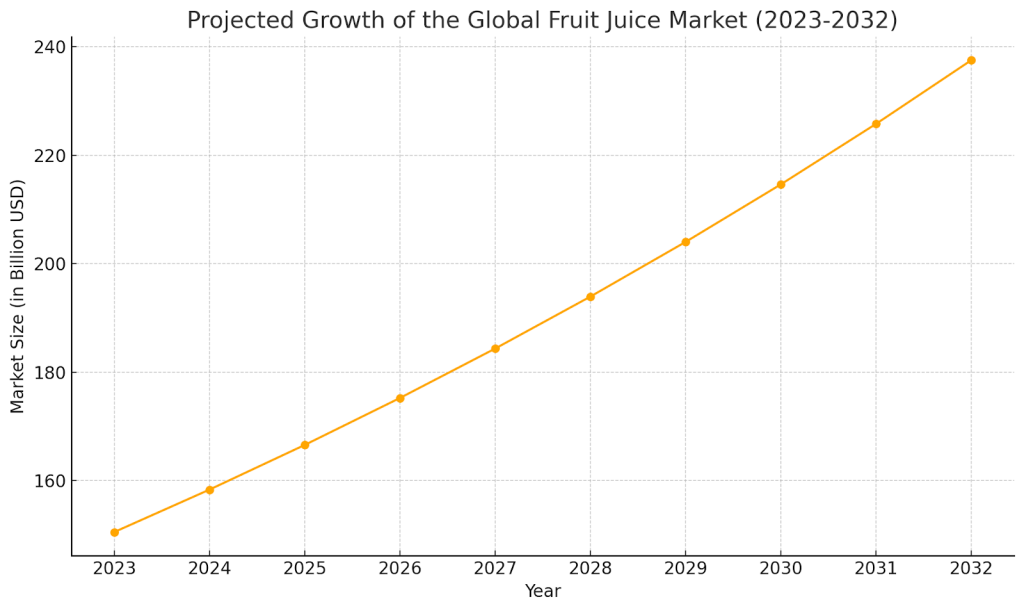
In the ever-dynamic food and beverage industry, the global fruit juice market stands out as a segment experiencing significant growth, as illustrated in our recent graph. This market is projected to swell from $150.52 billion in 2023 to an impressive $237.54 billion by 2032, marking a Compound Annual Growth Rate (CAGR) of 5.2%.
This expansion reflects a broader shift in consumer preferences towards healthier, convenient beverage options. The graph not only quantifies this growth but also encapsulates the evolving trends driving the market – from a surge in health-conscious consumers to an increased appetite for exotic and blended juices.
Emerging trends such as organic and wellness-focused juices, innovative packaging techniques, and global market expansion are key drivers of this growth. The graph serves as a vital tool for investors and industry stakeholders, offering a clear vision of the market’s trajectory and underscoring the lucrative opportunities within this sector.
The Future of Fruit Juice Investing
Adapting to Market Evolutions
Industry experts highlight the importance of staying agile in the ever-evolving juice market. Successful investing in this space requires adaptability to changing consumer preferences and the ability to foresee and capitalize on emerging trends.
Technology’s Transformative Role
Technology is playing a pivotal role in transforming the fruit juice market. From production and processing innovations to advancements in distribution and sales, technological integration is enhancing efficiency and creating new opportunities for market differentiation.
Sustainability as a Driving Force
Sustainability is becoming a key consideration in juice investing. This involves environmentally friendly farming practices, ethical sourcing, and reducing carbon footprints across the supply chain. Companies that prioritize sustainability are not only appealing to environmentally conscious consumers but are also future-proofing their operations.
Predicting the Juice Market’s Future
Looking forward, experts predict that the fruit juice market will continue to grow, driven by health trends and innovation. However, they also caution that success in this market will depend on companies’ abilities to balance consumer demands with sustainable practices, and to innovate continuously while maintaining quality and authenticity.
The juice market is ripe with opportunities, shaped by consumer health trends, technological advancements, and a growing emphasis on sustainability. As the industry adapts to these evolving dynamics, the future of fruit juice investing looks both challenging and promising, offering a range of opportunities for those ready to embrace change and innovation.
FAQs on Fruit Juice Market Investment
How profitable is the fruit juice market for investors?
The fruit juice market offers substantial growth potential, especially in segments like organic and health-focused products. However, profitability can be influenced by factors such as fluctuating raw material prices and changing consumer preferences. Strategic market analysis and trend forecasting are crucial to capitalize on this potential and mitigate risks.
What are the key risks in fruit juice investing?
Key risks in fruit juice investing include the volatility of raw material prices and shifts in consumer preferences. These factors can impact market dynamics and profitability. To manage these risks, investors should engage in thorough market analysis and stay attuned to consumer trends.
What are the best practices for successful investment in the fruit juice market?
Successful investment in the fruit juice market involves diversifying product offerings to cater to various consumer preferences, focusing on quality and innovation, and staying current with health trends. Additionally, implementing sustainable and ethical sourcing practices can enhance brand reputation and attract eco-conscious consumers.
How important are market regulations and quality standards in fruit juice investing?
Market regulations and quality standards are crucial in the fruit juice industry and can vary by region. Understanding and adhering to these regulations is essential for ensuring compliance, maintaining high product standards, and consequently supporting profitability and market acceptance.
In summary, investing in the fruit juice market presents a unique blend of opportunities and challenges. While the market is dynamic and offers substantial growth potential, particularly in health-focused and innovative product segments, it requires a keen understanding of consumer trends, market regulations, and quality standards. Success in this industry hinges on the ability to innovate, adapt, and maintain high standards of quality and sustainability. As the fruit juice market continues to evolve, a fact-based, strategic approach to investment will be key to tapping into its potential and achieving long-term success. Investors who can navigate the complexities of this market while staying attuned to consumer preferences and industry trends are well-positioned to reap the benefits of this vibrant and ever-changing industry.