

Artificial Intelligence (AI) is revolutionizing various sectors, and agriculture is no exception. The integration of AI into farming practices is transforming the industry in ways that were once unimaginable. By leveraging AI technologies, farmers can optimize resource use, enhance productivity, and promote sustainability, addressing some of the most pressing challenges in agriculture today.
Precision Farming: Enhancing Efficiency and Productivity
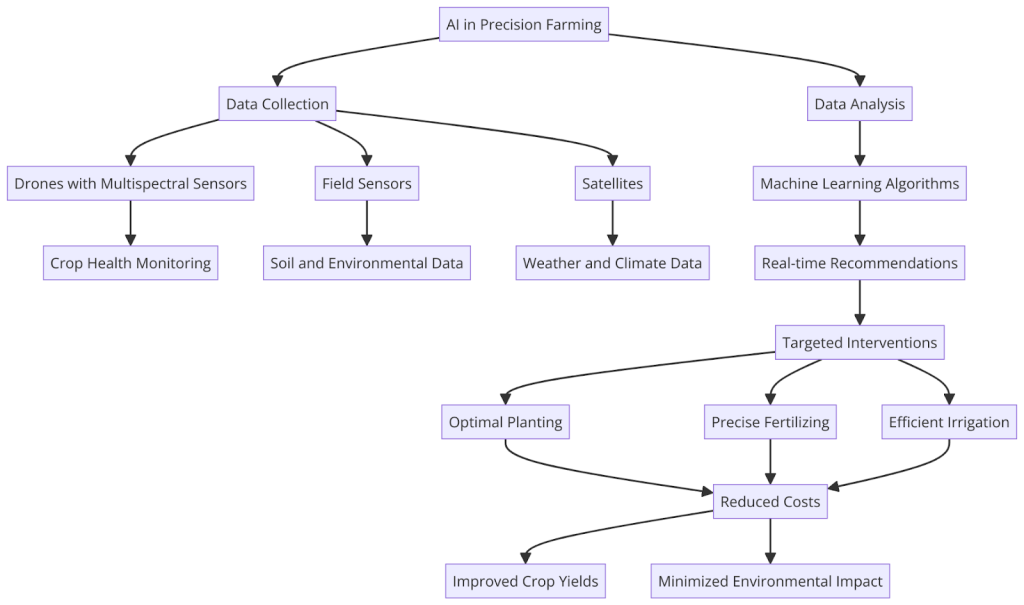
AI in agriculture encompasses a range of technologies, including machine learning, computer vision, robotics, and data analytics. These technologies work together to analyze vast amounts of data, automate complex tasks, and provide actionable insights. One of the most significant applications of AI in agriculture is precision farming. Precision farming uses AI algorithms to analyze data from various sources, such as satellites, drones, and sensors placed in fields. This data helps farmers make informed decisions about planting, fertilizing, irrigating, and harvesting crops.
For instance, AI-powered drones equipped with multispectral sensors can monitor crop health by capturing images that detect stress levels, nutrient deficiencies, and pest infestations. Machine learning algorithms analyze these images to provide real-time recommendations on targeted interventions. This approach minimizes the use of chemicals, reduces costs, and improves crop yields. Furthermore, AI-driven predictive analytics can forecast weather patterns, disease outbreaks, and market trends, allowing farmers to plan their activities more effectively and mitigate risks.
Robotics: Automating Labor-Intensive Tasks
Robotics is another area where AI is making a significant impact. Autonomous robots equipped with AI capabilities can perform labor-intensive tasks such as planting, weeding, and harvesting with precision and efficiency. For example, robotic harvesters use computer vision to identify ripe fruits and vegetables, picking them without damaging the plants. These robots work around the clock, increasing productivity and reducing the reliance on manual labor. In addition, AI-powered weeding robots can distinguish between crops and weeds, applying herbicides only where necessary, which helps reduce chemical usage and environmental impact.
Livestock Management: Improving Animal Health and Productivity
AI is also transforming livestock management. Smart collars and wearable devices equipped with AI sensors monitor the health, behavior, and location of animals. These devices collect data on vital signs, activity levels, and feeding patterns, which is then analyzed by AI algorithms to detect early signs of illness, stress, or estrus. Farmers receive alerts on their mobile devices, enabling timely interventions that improve animal welfare and productivity. Additionally, AI-driven systems can optimize feeding regimens, ensuring that livestock receive the right nutrients at the right time, enhancing growth rates and reducing feed costs.
Supply Chain Optimization: Enhancing Traceability and Efficiency
Supply chain optimization is another critical area where AI is making strides in agriculture. AI technologies track and analyze the movement of agricultural products from farm to fork, providing real-time data on quality, safety, and efficiency. For instance, AI-powered logistics platforms optimize transportation routes, reducing fuel consumption and delivery times. Blockchain technology, integrated with AI, ensures transparency and traceability in the supply chain, allowing consumers to verify the origin and quality of their food. These advancements enhance food safety, reduce waste, and improve the overall efficiency of the agricultural supply chain.
Sustainable Farming: Promoting Environmental Stewardship
AI’s role in sustainable agriculture cannot be overstated. By enabling more precise and efficient resource management, AI helps farmers reduce their environmental footprint. Smart irrigation systems use AI algorithms to analyze weather forecasts, soil moisture levels, and crop water requirements, applying water only when and where needed. This approach conserves water, reduces energy consumption, and maintains optimal soil moisture for healthy crop growth. Similarly, AI-powered pest management systems monitor pest populations and predict outbreaks, allowing for targeted and timely interventions that minimize pesticide use and environmental impact.
Challenges and Future Directions for AI in Agriculture
Despite its transformative potential, the adoption of AI in agriculture faces several challenges. One significant barrier is the high cost of AI technologies and the infrastructure required to support them. Small-scale and resource-limited farmers may find it difficult to invest in AI solutions. Additionally, the complexity of AI systems necessitates training and technical support, which may not be readily available in all regions. Ensuring data privacy and security is another critical concern, as the vast amount of data generated by AI systems must be protected from cyber threats and misuse.
To address these challenges, governments and private sector stakeholders must work together to create an enabling environment for AI adoption in agriculture. Providing subsidies, grants, and low-interest loans can help farmers invest in AI technologies. Developing affordable and user-friendly AI solutions tailored to the needs of small-scale farmers is also essential. Extension services and agricultural education programs should include training on AI technologies to equip farmers with the necessary skills and knowledge. Additionally, robust data protection regulations and cybersecurity measures are crucial to safeguard sensitive information.
The future of AI in agriculture holds immense promise. As AI technologies continue to evolve, their applications in agriculture will become more sophisticated and widespread. Advances in machine learning and deep learning will enable even more accurate predictions and recommendations. The integration of AI with other emerging technologies, such as the Internet of Things (IoT) and blockchain, will further enhance the efficiency and transparency of agricultural practices. Moreover, AI-driven innovations will play a vital role in addressing global challenges such as climate change, food security, and sustainability.
Embracing AI for a Sustainable Future
The rise of artificial intelligence is transforming agriculture beyond imagination. By enabling precision farming, automating labor-intensive tasks, optimizing livestock management, and enhancing supply chain efficiency, AI is revolutionizing the agricultural sector. While challenges remain, the continued development and adoption of AI technologies will pave the way for a more productive, sustainable, and resilient agricultural system. Embracing AI in agriculture is not just a technological advancement; it is a necessity for meeting the demands of a growing global population and ensuring the future of food security.