
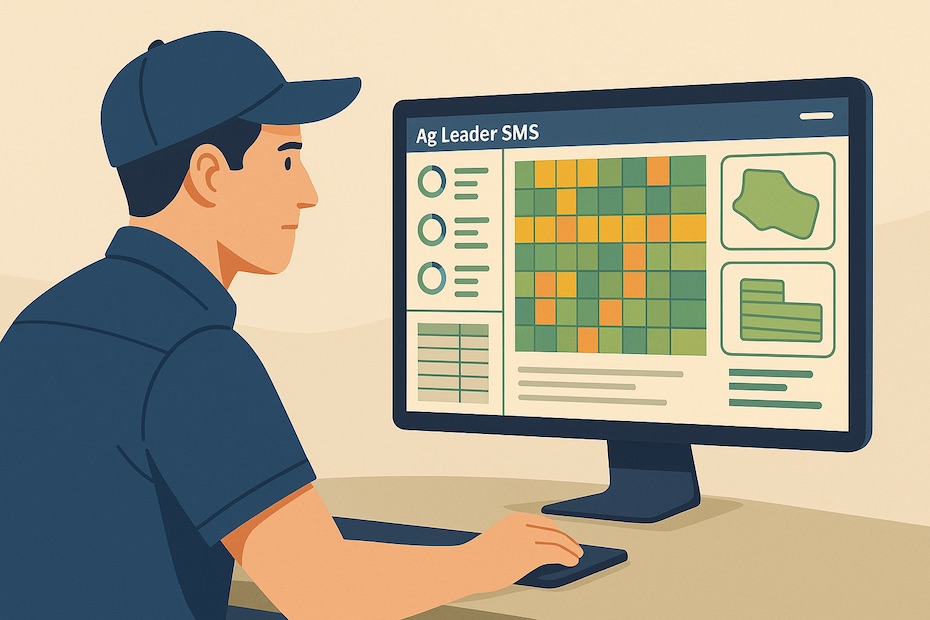
Ag Leader SMS gives you the ability to take raw field data and transform it into decisions that directly improve your farm management. It brings clarity, structure, and precision to data that would otherwise remain underutilized.
By reading this article, you’ll understand how SMS works across mapping, prescriptions, analysis, and reporting. You’ll see the benefits, challenges, and steps to implement it effectively, so you can unlock genuine value from every acre you manage.
What is Ag Leader SMS and why is it important?
Ag Leader SMS is a precision agriculture software platform designed to integrate mapping, prescriptions, yield analysis, and equipment data into a single system. It ensures that the information you capture in the field becomes practical for decision-making rather than just storage.
You use SMS to manage soil data, yield records, input applications, scouting logs, and equipment guidance lines. It accommodates both small farms with a few fields and large enterprises with multi-year, multi-crop data demands.
Because it supports data formats from various manufacturers, you’re not locked into one equipment brand. That flexibility makes SMS practical for operations using mixed fleets or custom applicators.
How does Ag Leader SMS collect and organize field data?
SMS begins at the field level. Using SMS Mobile or compatible displays, you capture data like boundaries, soil samples, and as-applied records. These inputs build the foundation for analysis.
Back in the office, you sync mobile data with the desktop software. SMS consolidates it with historical records, creating a unified field history. That complete picture allows you to evaluate long-term performance, not just season-to-season changes.
The software also supports importing shapefiles, CSVs, and proprietary equipment formats. This ability to standardize data ensures you can combine information across equipment brands and avoid silos.
How do you use SMS to build prescriptions and field plans?
SMS allows you to create prescription maps by combining soil fertility data, yield history, and management zones. In SMS Basic, you can build simple rate prescriptions. With SMS Advanced, you create multi-variable, formula-driven prescriptions that refine application decisions further.
Once prescriptions are generated, they’re exported to your in-cab displays for application. Operators follow these maps, ensuring accuracy in seed placement, fertilizer rates, or spray patterns.
After fieldwork, SMS imports the as-applied records. Comparing those with the prescriptions helps you track execution accuracy and pinpoint deviations, forming the feedback loop that strengthens future decisions.
What reporting and analysis features does SMS provide?
With SMS, you can analyze yield trends across years, evaluate input cost versus yield performance, and generate profit maps at the field or zone level.
Advanced reporting tools allow you to overlay multiple data layers—such as elevation, soil type, and moisture—against yield outcomes. This makes it easier to identify cause-and-effect relationships that drive smarter management.
You also build visual reports for stakeholders. Whether you’re working with agronomists, lenders, or investors, SMS-generated reports provide credible documentation of your decisions and results.
What benefits will you gain from SMS?
When properly used, SMS gives you a more controlled, efficient, and profitable farming operation. You’re no longer guessing where to apply inputs—you’re directing resources with precision.
You gain accountability because every application, pass, or scouting note is tracked. That means you can audit operations, coach operators, or verify compliance with environmental standards.
Most importantly, you can monitor profitability field by field or zone by zone. This allows you to prioritize investment where it matters most and avoid pouring resources into unproductive areas.
Key benefits you’ll notice over time:
- More efficient fertilizer and chemical usage
- Yield consistency across variable zones
- Reduced input waste and environmental impact
- Improved accountability of operators and equipment
- Stronger return on technology investment
What challenges should you prepare for with SMS?
Data quality is a major concern. GPS drift, faulty sensors, or incomplete operator input can create flawed data sets. Without clean data, analysis is compromised.
Training is another hurdle. You must ensure operators and managers know how to capture and handle data properly. If scouting notes or application logs are inconsistent, your reports won’t tell the full story.
There are also costs to manage—licensing fees, upgrades, and hardware compatibility. Aligning your budget with the right level of software (Basic vs. Advanced) ensures you invest wisely.
How should you implement SMS in your farm operation?
Start by defining your primary goal—whether it’s reducing input costs, improving yield consistency, or analyzing profitability. This focus will guide your implementation.
Deploy SMS Basic first. Begin with mapping, simple prescriptions, and record-keeping to establish familiarity. Once your team is comfortable, expand into SMS Advanced for deeper analysis.
Train your operators on data capture standards. Build a workflow for syncing field data back to the office. Use one or two fields as a test case before rolling it out across your operation.
By phasing adoption, you avoid overwhelming your team and minimize mistakes while learning.
Which metrics should you track to measure success?
Prescription compliance is one of the most important—are applications matching the prescription maps? Variance shows where improvements are needed.
Input savings quantify how much fertilizer or chemicals you’ve reduced by applying variable rates. These savings validate your investment quickly.
Yield stability is another metric. If you see less yield variation across management zones, your prescriptions and analysis are working.
Finally, ROI must be monitored. Compare the software and training costs to input savings and yield gains to ensure your use of SMS drives measurable returns.
What does Ag Leader SMS do for farmers?
- Captures and organizes field data
- Builds prescriptions and management zones
- Compares planned vs. applied operations
- Analyzes yield and profitability trends
Turning Data into Decisions
Ag Leader SMS gives you more than just maps—it gives you control. By converting raw field data into actionable strategies, you reduce waste, improve consistency, and build profitability. Start small, train your team, and monitor performance metrics. Each season you’ll sharpen your decisions, and over time, your operation becomes not just data-rich but insight-driven.
If you want more actionable guides on precision farming and decision-making tools, explore my profile here for additional posts.