
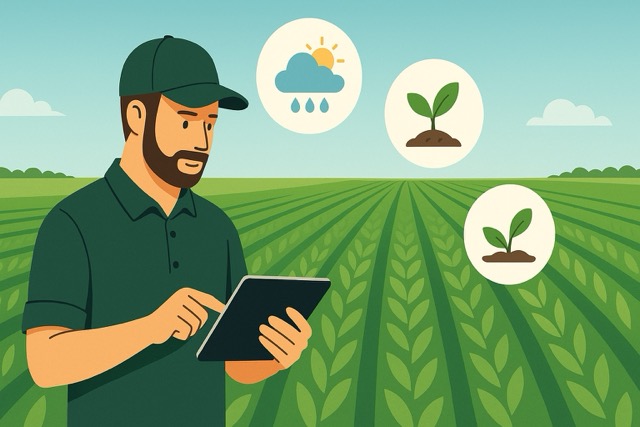
You’re no longer just a grower. You’re managing a complex business that relies on timing, data, and tight margins—and if you’re not using information to guide your decisions, you’re leaving money on the table. Today’s agriculture demands smarter choices, and data is the tool that helps you make them. Whether you run a family farm or manage hundreds of acres, using digital tools to track soil conditions, yields, weather patterns, and resource inputs can dramatically increase profitability and reduce waste. This article lays out the current tools, trends, and strategies that are shaping the shift toward data-driven agriculture, with a focus on how you can apply them in your operation today.
Precision Farming: Managing Fields by the Square Foot
Precision farming lets you get the most out of every acre by using data to make targeted decisions. With satellite imagery, GPS-based soil mapping, and drone monitoring, you can treat each zone of your field differently. This means adjusting seed rates, fertilizer inputs, or irrigation schedules based on exactly what that part of the field needs. Instead of treating your land as a uniform block, you’re managing it like a patchwork of micro-environments. That kind of control leads to better yields and lower costs because you’re not overspending where you don’t have to.
You can pair this with auto-guidance systems on your tractors to reduce overlap and fuel use. Variable-rate technology (VRT) takes it even further, applying inputs like nitrogen only where they’re needed. If you’re working on thin margins, precision farming gives you a measurable edge.
IoT Devices and Sensors: Real-Time Decisions in Your Hands
You no longer need to guess when it’s time to water, fertilize, or harvest. With Internet of Things (IoT) sensors embedded in your fields, you can track real-time changes in soil moisture, pH, temperature, and plant health. These sensors feed data into mobile apps and dashboards, giving you instant alerts when conditions fall outside optimal ranges. That means fewer surprises and more responsive decision-making.
Sensor networks are particularly useful in high-value crops where small losses can have a big impact. Tools like Teralytic, Arable, and Farm21 provide granular environmental data that helps you prevent diseases, manage irrigation more efficiently, and time your applications with precision. With weather becoming less predictable, this kind of monitoring is quickly becoming standard practice.
Satellite Imagery and Remote Sensing
You can now track crop development, stress, and growth across entire fields using satellite imagery services like Planet Labs or Sentinel. These tools help you spot problems before they show up to the naked eye. When your corn is stressed from a nutrient deficiency or your wheat field has a patch that’s underperforming, remote sensing can tell you where the issue is so you can act quickly.
Some services layer this imagery with historical data and predictive modeling. You can compare this season’s progress with last year’s and adjust your management plan accordingly. For larger farms, satellite imagery is a critical tool that saves time and reduces blind spots.
Farm Management Software: Running Your Operation Like a Business
Keeping your operation efficient means keeping your information organized. Farm management platforms like Trimble Ag Software, Granular, and Agworld let you consolidate everything—field records, input costs, equipment data, and even employee hours—into one place. That gives you a clearer picture of profitability per field, not just per acre.
With these platforms, you can also run financial models that test different crop strategies or forecast profits based on varying input costs. Some programs let you share live reports with your agronomist or accountant. If you’re applying for financing or working with partners, having a digital track record builds trust and accelerates approvals.
AI and Predictive Analytics: Forecasting What Comes Next
Artificial intelligence has moved from research labs to the field. Algorithms now help you predict the best planting windows, estimate harvest dates, and flag early signs of disease. By analyzing years of weather, soil, and yield data, AI platforms give you smarter forecasts than you’d get from a weather app alone.
Companies like OneSoil, xFarm, and PEAT’s Plantix app are using AI to give actionable suggestions tailored to your crops and region. If you’re trying to minimize risk in a volatile season, these tools can make a measurable difference. Over time, the more data you feed into these platforms, the more accurate and profitable their recommendations become.
Market Intelligence and Crop Marketing Platforms
Selling your crops well is just as important as growing them. Market data platforms like Bushel, Indigo Ag, and DTN help you track commodity pricing trends, monitor futures contracts, and manage grain contracts all in one place. You can use this information to make smarter decisions about when and where to sell.
Some platforms even offer predictive price modeling based on global trends and seasonal cycles. That means you can time your storage and transportation for maximum return, reducing the guesswork that often comes with grain marketing. If you’re operating on tight margins, this data can give you the leverage you need at the negotiating table.
Sustainability Tracking and Incentive Programs
Many buyers now require some level of sustainability tracking, and that’s where data pays off again. When you can prove that your farming practices reduce carbon output, use water responsibly, or improve soil health, you become eligible for incentive programs or carbon markets. Groups like the Soil and Water Outcomes Fund or Nori pay farmers for measurable environmental benefits tied to their data.
Whether it’s reduced tillage, cover cropping, or nutrient management, you can now monetize sustainability practices. But you’ll need verifiable data to access those funds—and the platforms we’ve mentioned can help you generate and track that information. You’re not just doing the right thing environmentally—you’re getting paid for it.
Key profitability boosters in data-driven farming include
- Precision input use and variable-rate application
- Real-time environmental monitoring
- Yield forecasting with AI
- Smarter marketing with commodity data
- Monetized sustainability tracking
In Conclusion
You’re no longer relying on gut instinct alone. With data on your side, you can fine-tune every part of your operation—from planting and irrigation to sales and logistics. The future of agriculture is about informed action, not guesswork. Whether you adopt sensors, software, satellite imaging, or AI, the goal is the same: higher profits, smarter decisions, and a more sustainable business. You don’t have to do it all at once, but each step you take toward data integration makes you more competitive, more efficient, and better prepared for whatever the next season brings.
Explore more of my perspectives on agricultural technology and the future of farming on Quora.